





Is Hard Water Damaging Your Home? Signs, Costs & How a Water Softener Fixes It

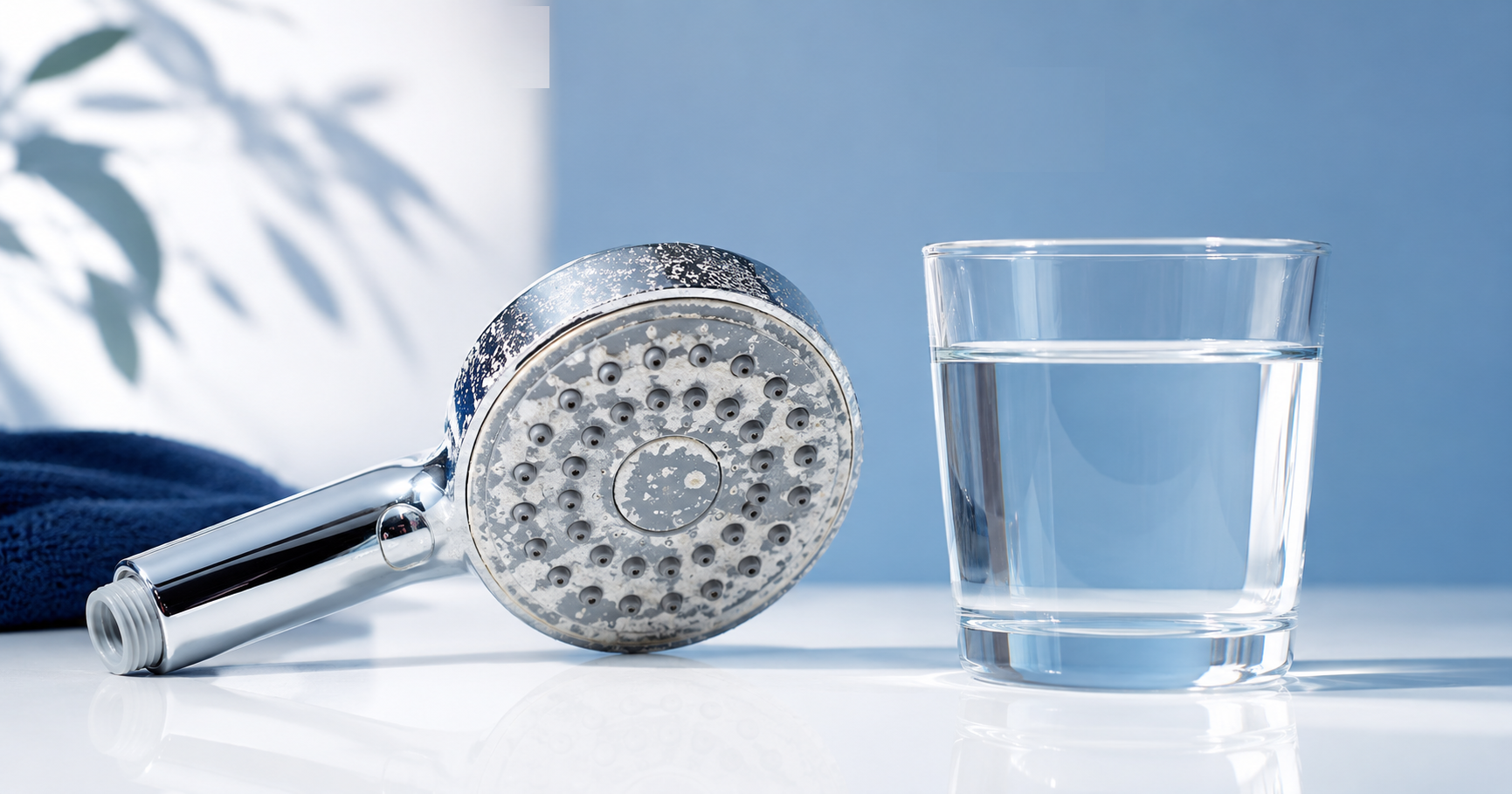
Your geyser scales up fast. Your taps carry a white crust that comes back days after you scrub it off. Dishes dry with spots, and soap barely lathers no matter how much you use. None of these are cleaning problems — they’re the classic signs of hard water, and while it won’t harm your health, it is quietly shortening the life of almost every water-using appliance in your home.
What is hard water?
Hard water is water with a high concentration of dissolved calcium and magnesium. These minerals dissolve naturally as water passes through rock and soil, which is why borewell and groundwater supplies — common across India — tend to be much harder than treated municipal water.
Hardness is measured in mg/L (or ppm) as calcium carbonate. Water below about 60 mg/L is considered soft, 60–120 moderately hard, 120–180 hard, and anything above 180 very hard. Indian standards (BIS 10500) set 200 mg/L as the acceptable limit for drinking water, with 600 mg/L permissible in the absence of an alternative source — many borewell supplies in India sit well into the “very hard” range.
How to tell if you have hard water
You usually don’t need a lab to suspect hard water. The signs show up all over the house:
- White scale on taps, showerheads, and around drain holes
- Spotty, cloudy dishes even after a proper wash
- Soap that won’t lather — you use more detergent and shampoo for less foam
- Stiff, faded laundry and towels that feel rough
- Dry skin and dull hair after bathing
- A geyser that heats slower every year, or a kettle with a chalky layer inside
To confirm it and get an actual number, test your water — our guide on testing water purity at home vs lab testing covers both quick home checks and full lab analysis.
Is hard water bad for your health?
Generally, no. Calcium and magnesium are minerals your body actually uses, and drinking moderately hard water is considered safe. Hardness is a different question from overall dissolved solids or contamination — if you’re worried about what’s safe to drink, see our guides on the best TDS level for drinking water and common water impurities.
The real damage from hard water is to your home, not your body.
What hard water is costing you
Every time hard water is heated or left to evaporate, its minerals come out of solution and deposit as scale. That scale builds up exactly where you can’t see it:
- Geysers fail years early. Scale coats the heating element, forcing it to work harder and longer. That means higher electricity bills every month, and eventually a burnt-out element or a corroded tank.
- Washing machines clog and wear out. Scale builds on the drum, heater, and inlet valves, while hard water itself makes detergent less effective — so clothes need more detergent and still come out duller.
- Pipes narrow and pressure drops. Years of deposits reduce the internal diameter of plumbing, choking flow to showers and taps.
- RO membranes and purifier filters die faster. Hardness is one of the main reasons purifier consumables need early replacement in borewell areas.
- Bathrooms need constant cleaning. The white crust on tiles, glass, and fittings is mineral scale — and it returns as long as the water stays hard.
Individually these look like small annoyances. Added up — extra electricity, extra detergent, early appliance replacement, plumbing repairs — hard water is one of the most expensive “invisible” problems an Indian household faces.
The fix: how a water softener works
A water softener removes the problem at its source. Inside the softener, water passes over a bed of ion-exchange resin that swaps the calcium and magnesium ions for sodium ions. The scale-forming minerals are captured before the water ever reaches your geyser, washing machine, or bathroom. Periodically, the softener flushes the resin with a salt solution to regenerate it, and it’s ready to work again.
The result is soft water throughout the house: appliances stay scale-free, soap lathers properly, clothes stay brighter, and skin and hair feel noticeably better.
Softener vs purifier: two different jobs
This is the most common confusion, so it’s worth being clear:
- A water softener protects your home — it removes hardness minerals from the whole house supply so appliances and plumbing last longer.
- A water purifier (RO/UV) protects your health — it removes dissolved salts, bacteria, and chemicals from the water you drink and cook with.
In hard borewell-water areas, many homes need both: a softener at the inlet for the whole house, and a purifier in the kitchen for drinking water. If your TDS is also high, our guide on high TDS in water explains what that means for drinking.
Choosing the right softener
Softeners are sized by how much hardness they must remove and how much water your household uses. Two things decide the right fit: your water’s measured hardness (from a test) and your daily consumption. An undersized softener regenerates constantly and wears out; a correctly sized one runs for years with nothing more than salt top-ups.
The bottom line
Hard water won’t hurt you, but it is steadily wearing out your geyser, washing machine, purifier, and plumbing — and quietly inflating your electricity and detergent bills. Test your water, and if it’s hard, a properly sized softener pays for itself in the appliances you don’t have to replace.
At DraQua, part of ION INDIA LIMITED, we build water softeners for Indian water conditions, from compact home units to whole-house systems. Explore our water softeners, or contact our team to size the right one for your water.
Related guides
This article is part of our complete Water Quality Guide. Continue reading:
