





Monsoon and Your Water: Why Quality Changes in the Rains

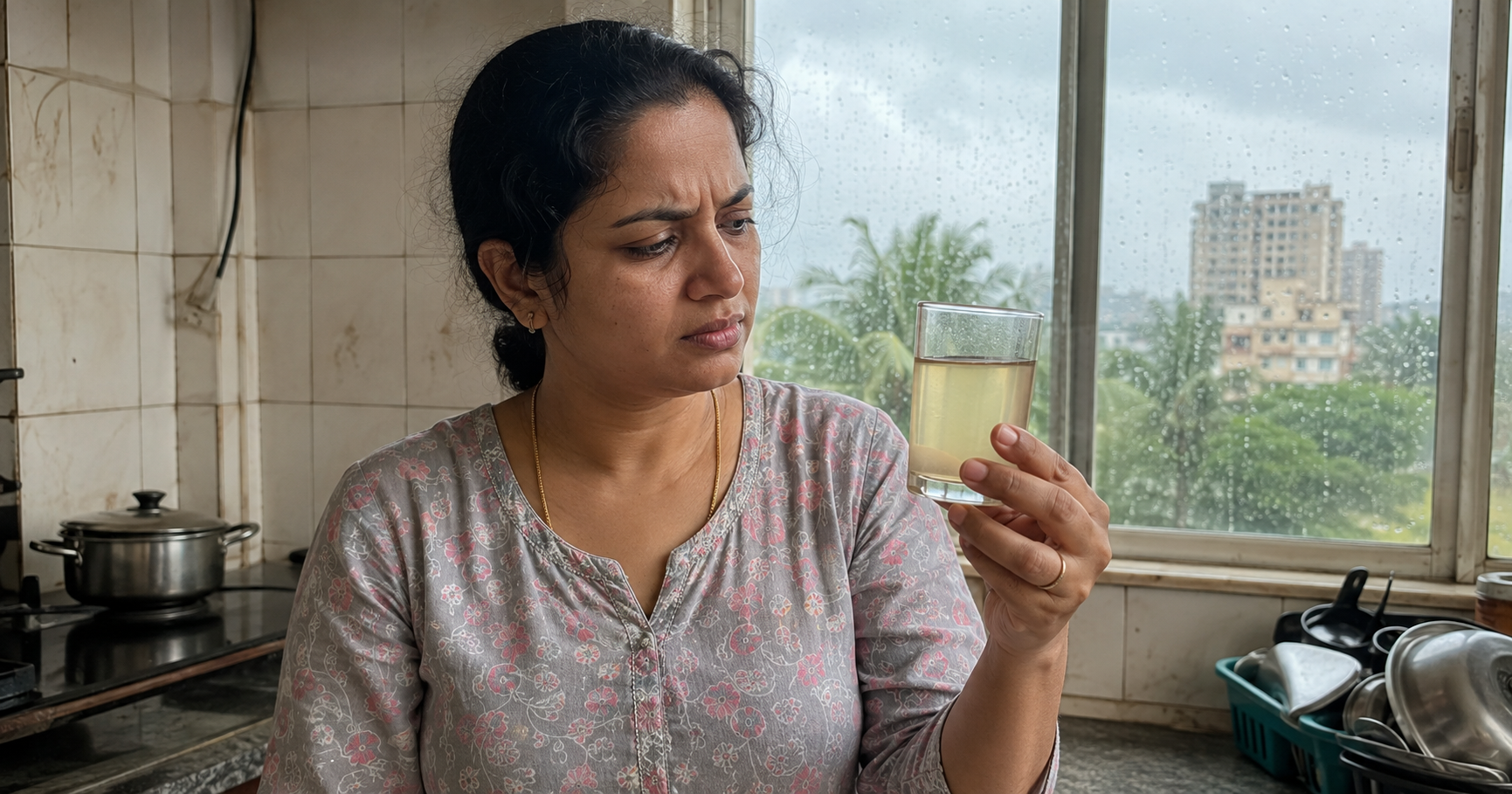
Every monsoon, many Indian households notice something odd about their water — it looks cloudy, tastes different, or smells off. It’s not your imagination. The rains genuinely change water quality, often for the worse, and understanding why helps you keep your family’s water safe through the season. Here’s what happens to your water in the monsoon, and what to do about it.
Why does water quality change in the monsoon?
Heavy rain disturbs both surface water and groundwater. Rainwater washes soil, debris, sewage, and pollutants into rivers, lakes, and wells, and rising water tables can push contaminants into borewells that were fine in the dry months. So even if your water was clear and safe in summer, the same source can become risky during and just after the rains.
Common monsoon water problems
- Cloudy or muddy water — rain washes silt and sediment into the supply, making water turbid.
- Bacterial contamination — the biggest monsoon risk. Runoff carries sewage and organic matter into water sources, raising the chance of waterborne illness.
- Bad taste and smell — decaying organic matter and contaminants change how water tastes and smells.
- Colour changes — a yellowish or brownish tint from soil, iron, or organic matter washed in.
- Pipeline contamination — during floods and waterlogging, damaged or submerged pipes can let dirty water seep into the supply.
Why the monsoon raises health risks
This is the important part. The monsoon is the peak season for waterborne diseases in India — illnesses like typhoid, cholera, hepatitis A, and gastroenteritis all spike during the rains, largely because of contaminated drinking water. Children and the elderly are especially vulnerable. That’s why being extra careful about drinking water in this season isn’t just about taste — it’s about health.
Does hardness change in the monsoon?
Interestingly, yes — often in the opposite direction. Fresh rainwater diluting groundwater can temporarily lower hardness and TDS in some areas. But this varies, and the bigger monsoon concern is contamination, not hardness. Don’t assume softer-feeling monsoon water is safe to drink; dilution doesn’t remove bacteria or pollutants.
How to keep your water safe during the monsoon
- Never drink untreated water — this is the season to be strictest. Always purify drinking water.
- Use a good purifier — an RO or RO+UV purifier handles both dissolved impurities and bacteria; UV is particularly valuable against the microbial contamination that peaks now.
- Boil as a backup — if your purifier is down, boiling water for a few minutes kills most disease-causing organisms.
- Clean your storage tanks — sediment and contaminants settle in overhead and underground tanks during the rains; get them cleaned before and after peak monsoon.
- Check for pipeline issues — if your area floods, be extra cautious, as pipeline contamination is common.
- Test your water — if you’re on borewell or well water, a monsoon-season test tells you what you’re actually dealing with. See our guide on testing water at home vs lab.
Don’t forget appliance protection
While drinking-water safety is the monsoon priority, remember that hardness (where present) still affects your appliances year-round. If your water is hard, a softener continues protecting your geysers and machines regardless of season, while a purifier handles the drinking-water safety that matters most in the rains. The two do different jobs — see softened water vs RO water.
In summary
The monsoon genuinely changes your water — usually raising the risk of cloudiness, bad taste, and most importantly bacterial contamination, which is why waterborne illness peaks in the rainy season. Be strict about purifying drinking water, clean your storage tanks, stay alert to pipeline issues, and test borewell water if in doubt. A little extra care through the rains keeps your family safe. Explore our full range of water-quality guides for more.
