





Water Softener Salt: Which Type, How Much & How Often

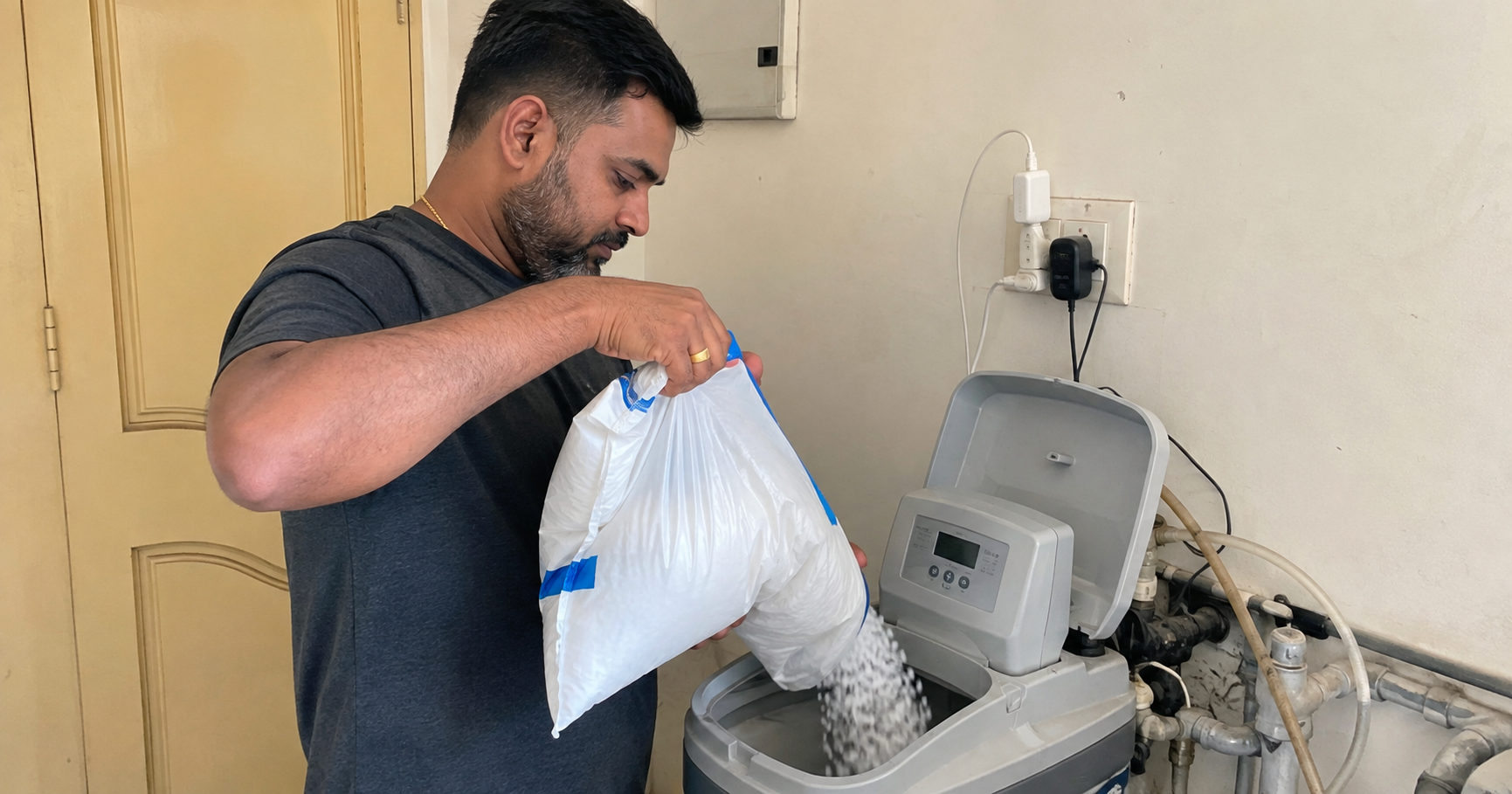
If you own a water softener, salt is the one thing you’ll keep buying — and one of the most common sources of confusion. Which type should you use? How much does a softener actually consume? And how often do you need to top it up? Here’s a clear, practical guide to water softener salt for Indian homes.
Why does a water softener need salt?
A softener removes hardness using resin beads that swap the calcium and magnesium in your water for sodium. Over time those beads fill up with hardness minerals and stop working — so the softener runs a cleaning cycle called regeneration, flushing the trapped minerals out and recharging the beads. Salt is what makes this recharge possible. Without salt, the resin can’t be renewed, and your softener stops softening. In short: the salt doesn’t soften your water directly — it keeps the resin that does the softening alive. For the full mechanism, see our guide on how a water softener works.
Which type of salt should you use?
Not all salt is suitable. Using the wrong kind can damage your softener or leave residue. The main options:
- Softener salt pellets/tablets — the recommended choice. Compressed, high-purity salt made specifically for softeners. They dissolve cleanly, leave little residue, and keep the brine tank clean.
- Crystal/granular softener salt — also made for softeners; fine for many units, though can sometimes bridge or cake in the tank.
- Table salt / cooking salt — do NOT use. It contains additives and anti-caking agents that clog the system.
- Rock salt — cheap but often high in impurities and insoluble matter that build up in the tank; generally not recommended.
The simple rule: use salt made specifically for water softeners — pellets are the safest, cleanest option. Always follow your softener manufacturer’s recommendation.
How much salt does a softener use?
This depends on three things: how hard your water is, how much water your household uses, and how efficient your softener is. Harder water and higher usage mean more frequent regeneration and more salt. As a rough guide, a typical family home might use somewhere in the range of one bag of softener salt every few weeks to a couple of months — but very hard water or a large household can use considerably more.
The most reliable approach isn’t to guess but to watch your own salt tank over the first couple of months and learn your home’s actual rate.
How often should you refill the salt?
Rather than a fixed schedule, go by the tank level. A good habit:
- Check the brine tank once a month — a quick look is enough.
- Keep it at least one-third full — refill before it drops below that so the softener never runs short during regeneration.
- Never let it run completely empty — if it does, the resin won’t regenerate and hard water will pass through until you refill and it recharges.
Smart and app-connected softeners make this easier by tracking salt levels and alerting you when it’s time to refill, so you’re never caught out.
Common salt problems to watch for
- Salt bridging — a hard crust forms in the tank, leaving an air gap so the salt looks full but isn’t dissolving. Break it up gently if you see it.
- Salt mushing — dissolved salt re-solidifies into a sludge at the bottom, which can block the system. Using good-quality pellets reduces this.
- Residue buildup — from low-quality salt; another reason to stick with softener-grade salt.
Does softened water make my water salty?
A common worry — but no. The salt goes into the separate brine tank to recharge the resin, not into your drinking water. Softening does add a small amount of sodium to the water as it swaps out hardness, but it’s minor for most people. Those on strict low-sodium diets often prefer to drink purified water; see softened water vs RO water for the full picture.
In summary
Use salt made specifically for water softeners — pellets are the cleanest choice — and never ordinary table or rock salt. How much you use depends on your water hardness and household size, so learn your own rate over the first couple of months. Check the tank monthly, keep it at least a third full, and never let it run empty. Do that, and your softener will keep protecting your home reliably. Explore our other water softener guides to get the most from your system.
