





Is Your RO Purifier Wasting Water? How Much & How to Fix It

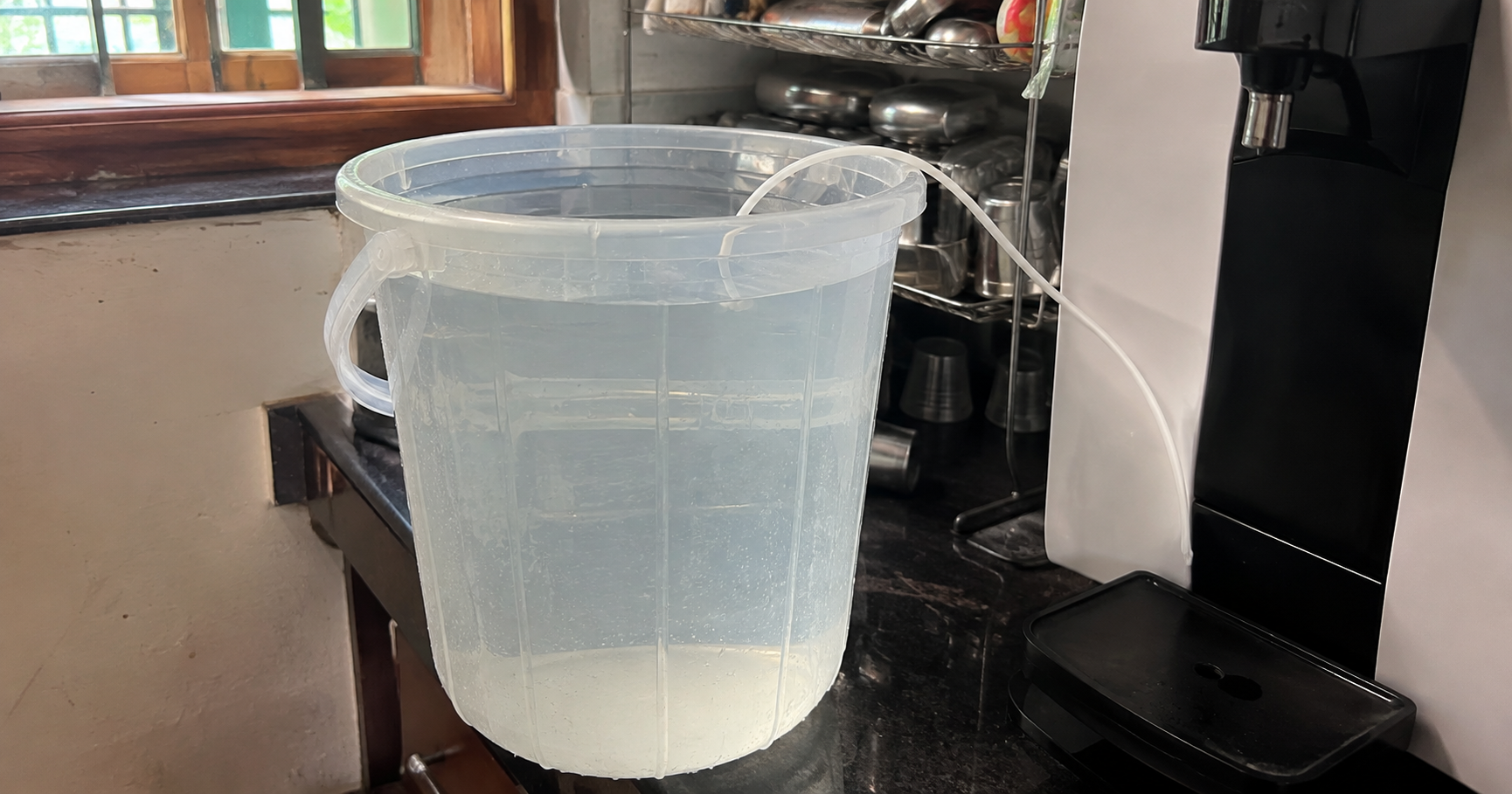
If you use an RO water purifier at home, here’s something you may not realise: for every litre of clean water it gives you, it quietly sends several litres down the drain. RO purifiers waste water by design — but how much, and can you do anything about it? Here’s the honest picture, and practical ways to cut the waste.
Why RO purifiers waste water
Reverse osmosis works by forcing water through an extremely fine membrane that blocks dissolved solids, salts, and contaminants. But that membrane can’t push everything through — a large share of the water is used to flush away the rejected impurities, and that portion goes out as “reject” or waste water. It’s how the technology keeps your drinking water clean, so some waste is unavoidable.
How much water does an RO actually waste?
This surprises most people. A typical domestic RO purifier wastes roughly 3 litres of water for every 1 litre of purified water it produces — and some older or poorly-tuned units waste even more. Over a year, that adds up to a significant amount of water going straight down the drain, which matters both for your bills and, in water-scarce parts of India, for the community.
What affects how much your RO wastes?
- Input water TDS — the higher the dissolved solids in your supply, the harder the membrane works and the more it rejects. High-TDS borewell water wastes more.
- Membrane condition — an old or clogged membrane wastes more and purifies less.
- Water pressure — low pressure reduces efficiency and increases waste.
- Purifier quality and design — better-designed units recover more water and waste less.
How to reduce RO water wastage
You can’t eliminate the waste, but you can cut it substantially:
- Reuse the reject water — this is the biggest win. RO waste water is simply higher in dissolved salts; it’s perfectly usable for mopping floors, washing utensils, flushing toilets, watering non-sensitive plants, or cleaning. Collect it in a bucket or route it to a storage tank.
- Fix low pressure — ensure your purifier gets adequate water pressure; a booster pump helps where supply is weak.
- Maintain the membrane — replace it on schedule so it runs efficiently rather than wasting more as it ages.
- Soften very hard input water first — if your supply is very hard or high-TDS, treating it before the RO reduces the load on the membrane, so it lasts longer and works better.
- Choose an efficient purifier — modern units with better recovery rates waste far less than older designs.
Is RO waste water safe to reuse?
Yes, for non-drinking uses. RO reject water isn’t dirty or contaminated — it simply has a higher concentration of the dissolved salts the membrane removed. That means it’s fine for cleaning, mopping, flushing, and washing, though it’s too salty for drinking or for salt-sensitive plants. Reusing it is one of the easiest ways to make your RO far less wasteful.
Do you even need an RO?
Worth asking. RO is essential when your water has high TDS or contamination that needs removing. But if your main problem is hardness rather than TDS, a water softener — which wastes far less water during its occasional regeneration — may be what you actually need. Many homes confuse the two. See our guides on softened water vs RO water and the best TDS level for drinking water to understand which your home needs.
In summary
RO purifiers waste water by design — typically around 3 litres wasted per litre purified — but you can cut that dramatically by reusing the reject water for cleaning and flushing, maintaining the membrane, ensuring good pressure, and treating very hard input water first. And if hardness rather than TDS is your real issue, a softener may be the more water-efficient answer. Explore our full range of water-quality guides to find what fits your home.
