





Borewell Water Problems in India: A Complete Guide

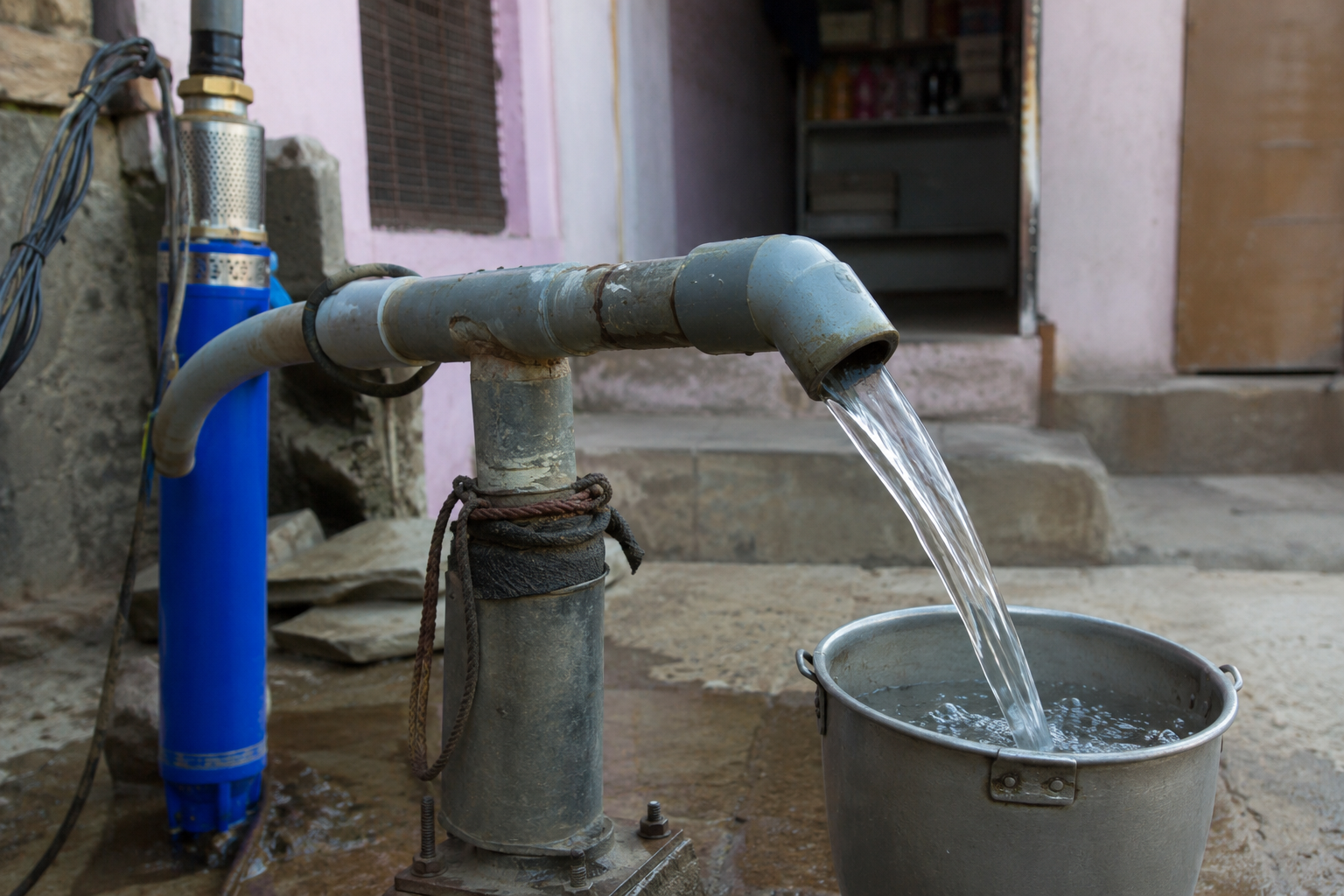
Across India, millions of homes depend on borewell water — and for good reason. It’s often the most reliable supply when municipal water is limited or irregular. But borewell water comes with its own set of problems, from hardness and high TDS to contamination, and understanding them is the first step to making your water safe and appliance-friendly. Here’s a complete guide.
Why so many Indian homes rely on borewells
Municipal water supply in most Indian cities doesn’t fully meet demand, especially in newer areas, apartments, and the outskirts. Borewells fill that gap by drawing groundwater directly. It’s convenient and reliable — but that groundwater picks up whatever the local soil and rock contain on its way up, which is where the problems begin.
Problem 1: Hardness (the most common)
By far the most widespread borewell issue is hardness. As groundwater moves through rock and soil, it dissolves calcium and magnesium — the minerals that make water “hard.” You’ll recognise the signs immediately:
- White scale on taps, geysers, and utensils
- Soap and shampoo that won’t lather properly
- Stiff, dull laundry
- Geysers and washing machines failing early
- Dry skin and hair after bathing
Hardness doesn’t harm your health, but it quietly damages every water-using appliance in your home. The fix is a water softener, which removes calcium and magnesium at the point where water enters your home. Learn more in our guide on how hard water damages your home.
Problem 2: High TDS (total dissolved solids)
Borewell water often carries a high level of total dissolved solids — a measure of everything dissolved in the water, including salts and minerals. High TDS can make water taste salty or bitter, and in many regions borewell TDS is well above the comfortable range for drinking. A water softener does not reduce TDS; that requires an RO purifier. See our guide on high TDS in water and the best TDS level for drinking water.
Problem 3: Contamination and safety
This is the most serious borewell concern, and it varies by region. Depending on local geology and industry, borewell water can carry:
- Fluoride — high in parts of Rajasthan, Telangana, and elsewhere; harmful in excess
- Arsenic — a grave issue in the Gangetic belt (Bihar, West Bengal, parts of UP)
- Nitrates — from agricultural runoff, a risk especially for infants
- Iron — causes staining, metallic taste, and reddish water
- Industrial pollutants — near textile, tannery, or industrial belts
- Bacteria — if the borewell or surrounding area is poorly maintained
This is critical to understand: none of these are removed by a water softener. They are separate, health-related issues that require a suitable, certified purifier — and the only way to know what’s in your water is to test it.
Problem 4: Salinity (coastal and arid areas)
In coastal cities and dry regions like Saurashtra, borewell water is often saline — carrying elevated salt from seawater intrusion or arid-region geology. Salty borewell water is both hard and high in TDS, and is harder on plumbing than ordinary hard water.
Why testing your borewell water is essential
Because borewell water varies so much by location — even between neighbouring areas — you cannot assume it’s safe or know how to treat it without testing. At minimum, test:
- Hardness — to decide if you need a softener
- TDS — to decide if you need an RO purifier
- Contaminants (a full lab test) — especially if you drink borewell water, to check for fluoride, arsenic, nitrates, and heavy metals
Our guide on testing water at home vs lab testing explains how.
How to fix borewell water problems
The right solution depends on what your test reveals — and often you need more than one:
- For hardness → a water softener protects your whole house from scale
- For high TDS or contamination → an RO purifier at the drinking tap makes water safe
- For both → a softener plus a purifier, each handling its own job
Most borewell homes in hard-water regions end up using both, because hardness and drinking-water safety are two different problems. See softened water vs RO water for why.
In summary
Borewell water is a reliable supply, but it commonly brings hardness, high TDS, and — depending on your region — contamination and salinity. Hardness damages appliances; TDS and contaminants affect drinking safety. The essential first step is testing your water, then treating it: a softener for hardness, a purifier for drinking safety, or both. Explore our full range of water softener and water-quality guides to find what your home needs.
