





Can You Drink Softened Water? Softened vs RO Water Explained

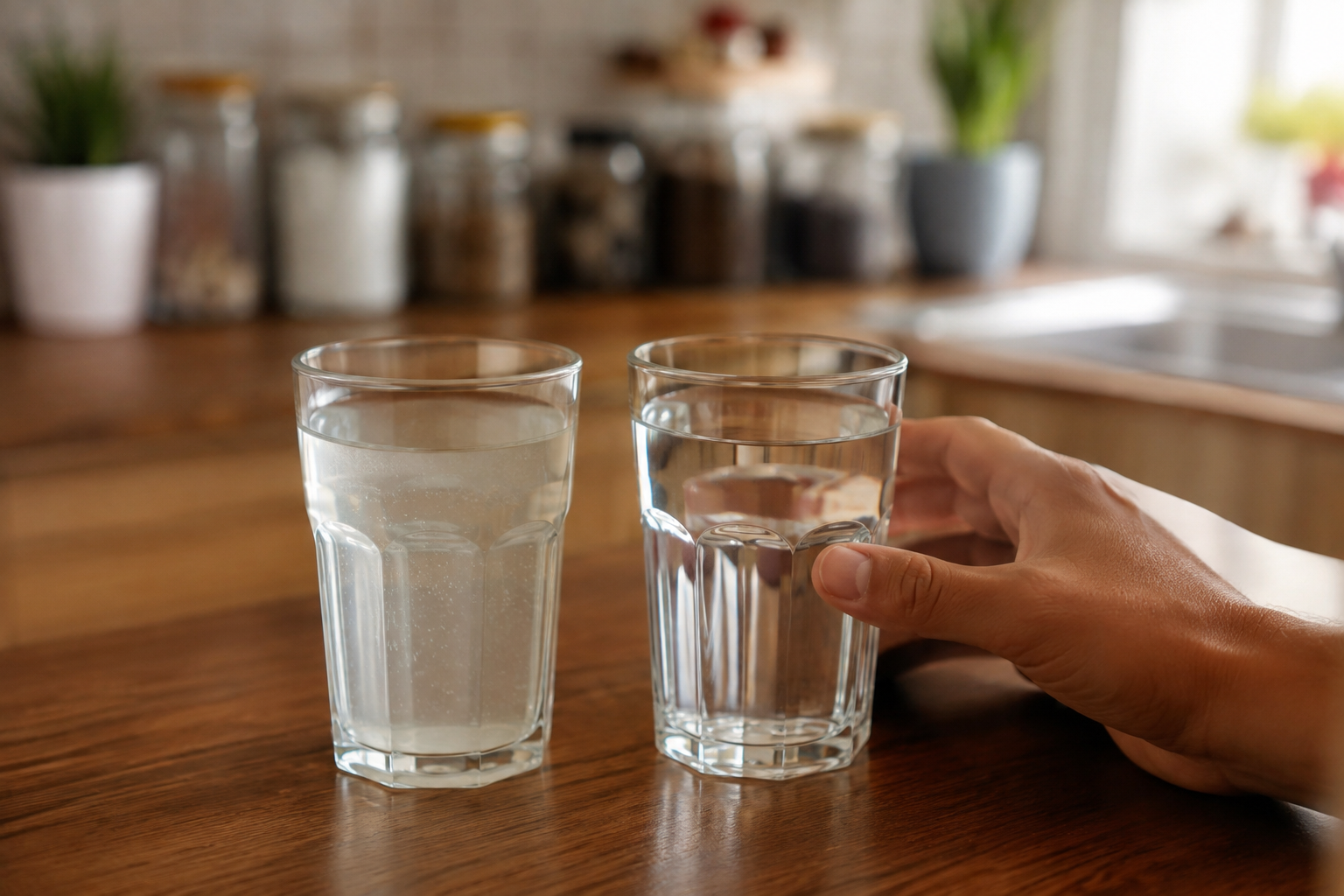
It’s one of the most common questions people ask after installing a water softener: can I drink this water? The short answer is that softened water and purified (RO) water are two completely different things, solving two completely different problems. Confusing them is easy — and understanding the difference tells you exactly what your home needs.
Softened water and RO water are not the same
A water softener and a water purifier do different jobs. A softener treats hardness. A purifier treats safety and taste. One does not replace the other, and knowing which is which saves you from both scale damage and drinking-water worries.
What a water softener actually does
A softener removes the calcium and magnesium that make water “hard” — the minerals that cause limescale on taps and geysers, stop soap from lathering, and damage appliances. It does this through ion exchange, swapping those hardness minerals for sodium. The result is soft water that protects your plumbing and appliances and makes washing far better.
But here’s the key point: a softener does not remove bacteria, viruses, dissolved chemicals, heavy metals, or reduce total dissolved solids (TDS) for drinking safety. It only deals with hardness. The water is “soft,” not “purified.”
What an RO purifier does
A reverse osmosis (RO) purifier is designed for drinking-water safety. It pushes water through a fine membrane that removes dissolved solids, contaminants, heavy metals, and impurities, and typically pairs with other stages to handle bacteria and improve taste. The result is water that’s safe and pleasant to drink.
An RO purifier is not designed to soften a whole house — it treats water at a single point, usually the kitchen tap, for drinking and cooking.
So — can you drink softened water?
This is the heart of the question. Technically, softening itself doesn’t make water unsafe — it simply swaps hardness minerals for a small amount of sodium. But softened water is not purified water. If your underlying water supply has high TDS, contaminants, or safety concerns, softening does nothing to fix those — they’re still there. So softened water should not be assumed safe to drink just because it’s soft.
There’s also the sodium consideration: because softening adds a small amount of sodium to the water, people on strict low-sodium diets often prefer to drink purified water rather than softened water. For most people the amount is minor, but it’s worth knowing.
The bottom line: drink water that has been purified for safety, not merely softened for hardness.
Do you need both a softener and a purifier?
In much of India, yes — and this is the practical answer most homes arrive at. The two work together:
- A softener treats the whole house, protecting every tap, geyser, washing machine and fixture from scale.
- An RO purifier sits at the kitchen tap, making the water you actually drink safe and clean.
If your water is hard (scale on taps, poor lather, failing geysers), you need a softener. If your water has quality or safety concerns for drinking (high TDS, contaminants, taste issues), you need a purifier. Homes with both problems — which is common on hard borewell water — use both, each doing its own job.
A simple way to decide
- Scale, poor lather, appliance damage → you have a hardness problem → a water softener.
- Drinking-water safety, taste, high TDS → you have a purification problem → an RO purifier.
- Both → both, working together.
In summary
Softened water and RO water are not interchangeable. Softening removes hardness to protect your home; purification removes contaminants to protect your health. You shouldn’t rely on softened water for drinking — drink purified water instead, and use a softener to handle hardness across the house. If you want to understand the mechanics, see our guides on how a water softener works and how to choose a water softener.
