





What Grows Inside Your Water Purifier Storage Tank

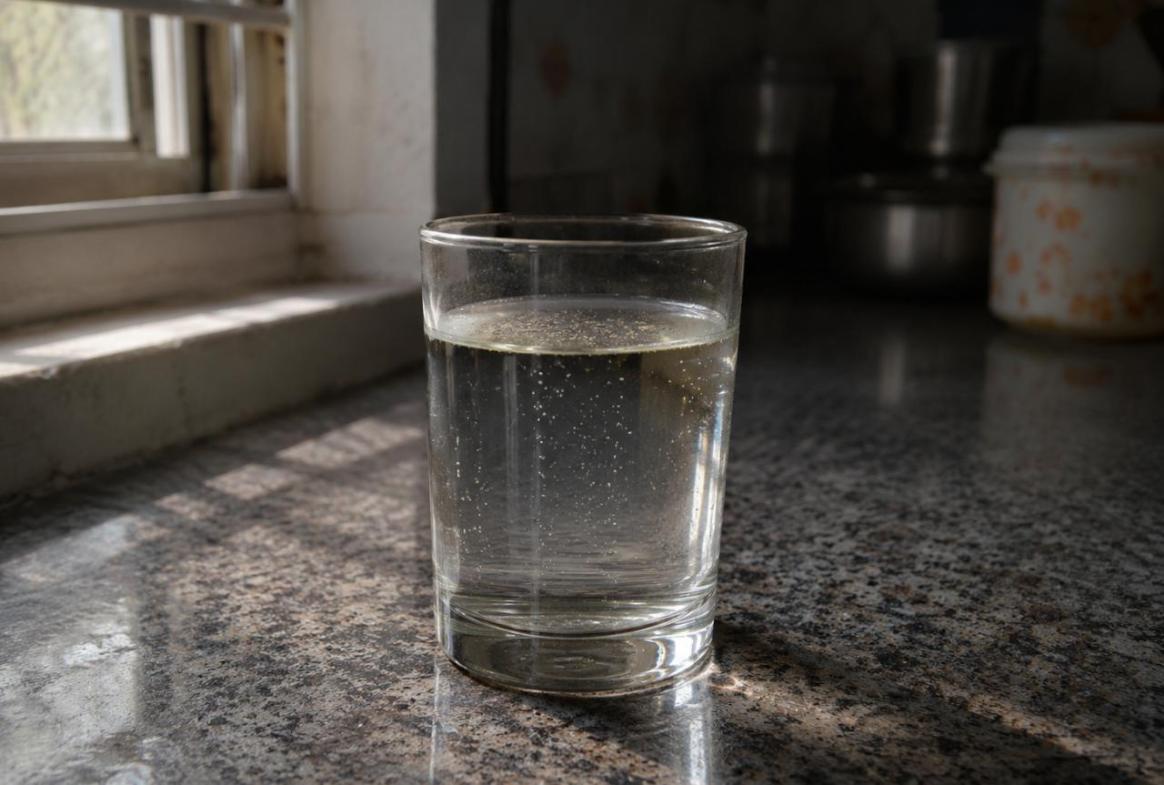
Your RO purifier does its hard work in minutes, but the water you actually drink has usually been sitting still for hours. It waits in the water purifier storage tank — the 6 to 10 litre plastic container hidden inside the cabinet or behind the unit — until someone opens the tap. That waiting is the part nobody thinks about, and it is where a few slow changes happen.
This is not a warning that your purifier is making you sick. For most homes it is not. But a water purifier storage tank is the one component that is never looked at, rarely cleaned, and quietly responsible for a surprising number of taste and smell complaints.
What the tank actually is
Open most domestic RO units and the tank is a sealed food-grade plastic vessel. Larger under-sink systems often use a steel or plastic shell with a rubber bladder inside and a cushion of air behind it — that air pressure is what pushes water out when you open the faucet.
Two things matter here:
- The tank is not sterile. RO removes the overwhelming majority of bacteria, so the water arriving is very clean. But the tank breathes. Air moves in and out through the faucet and the vent as the level rises and falls, and air carries microbes.
- The water is still. In a busy family the tank turns over several times a day. In a two-person flat, or a home that is empty all week, the same water can sit for days.
What forms inside
The honest answer is: a thin layer of life on the wet surfaces, called biofilm.
Biofilm is what bacteria build when they settle on any permanently wet surface — a slippery film a fraction of a millimetre thick. It is the same stuff that makes a flower vase slimy after a week, or coats the inside of a pet’s water bowl. Given a wet plastic wall and time, it will form. Purified water slows it down a great deal, because there is very little for the organisms to eat, but it does not prevent it.
| What’s in there | Where it comes from | Does it matter? |
|---|---|---|
| Biofilm on the tank walls | Airborne bacteria settling on wet plastic | Mostly harmless species; affects taste and smell |
| Fine sediment | Carried through when a pre-filter is overdue | Visible specks, cloudy first glass |
| Dissolved air | Normal, from the pressure cushion | Milky-looking water that clears in seconds — harmless |
| Plastic or rubber taste | New tank or new bladder off-gassing | Fades in a few weeks |
If your complaint is a new plastic taste rather than a stale one, the tank is probably not the culprit — that is covered in why your water tastes like plastic after a new installation.
Why this usually is not dangerous
Worth saying plainly, because this subject attracts a lot of fear-selling.
The organisms that colonise a clean water tank are overwhelmingly ordinary environmental bacteria, not the ones that cause illness. Disease-causing bacteria need nutrients, and RO water is close to a desert for them. A healthy household drinking from a reasonably maintained purifier is not at meaningful risk from its own storage tank.
What biofilm reliably does is affect how the water tastes and smells — flat, stale, slightly musty, strongest in the first glass of the morning. If that is what you are noticing, read why your water smells only in the morning, because stagnation in the tank is one of the two usual causes.
The signs that your tank needs attention
- The first glass of the day tastes stale, but the second is fine.
- A faint musty or earthy smell when you fill a bottle and cap it.
- Water that was fine six months ago and has slowly got worse, with no change in supply.
- Visible specks settling at the bottom of a stored bottle — usually a pre-filter problem that ends up in the tank.
- You came back from a two-week trip and the water tastes wrong.
Note what is not on that list: sudden illness, visible discolouration, or a strong chemical smell. Those point somewhere other than the tank, and are worth a water test rather than a tank clean.
How often, and what actually helps
- Get it cleaned at every second service. Roughly once a year for most homes, every six months if your water is hard or your usage is low. A technician drains it, opens it where the design allows, cleans and sanitises it. This is a standard part of a proper service — ask for it by name, because it is often skipped.
- Do not open a pressurised tank yourself. The air cushion is under real pressure. Draining and flushing you can do; dismantling is a job for someone who has done it before. Our honest answer on DIY purifier work sets out which jobs are reasonable at home.
- Flush after any long gap. Back from a holiday, or a flat that was shut up for a fortnight? Run the tank empty once and let it refill before you drink. Thirty seconds of tap time, and it solves most post-holiday taste complaints.
- Keep the pre-filter on schedule. Most of what ends up as sediment in the tank got past a filter that was due for replacement. The same logic applies to your overhead tank, which we covered in what settles into a terrace water tank.
- Replace the post-carbon filter. This one sits after the tank and is specifically there to polish the taste on the way out. It is the cheapest fix for stale-tasting water and the one most often forgotten.
Does UV solve it?
Partly, and only if it is in the right place. UV kills organisms passing through the lamp at that moment — it leaves nothing behind in the water to stop regrowth later. A UV stage placed before the tank does nothing for biofilm already on the tank walls. Some designs put a UV stage after storage, which is far more useful for this particular problem. If you are weighing up stages, our RO vs UV vs UF guide explains which does what.
Bottom line
Your water purifier storage tank is the only part of the system where water sits still, so it is the only part where a biofilm can build. In a normal home that is a taste problem, not a health one. Have it cleaned at service, flush it after long absences, keep the pre-filter on time, and change the post-carbon — and the stale first glass goes away.
Due a post-carbon change? The IVES Inline Post-Carbon T33 (Coconut Shell) at ₹135 is the stage that sits after the tank and does the final taste polish.
