Why Your Water Smells Only in the Morning

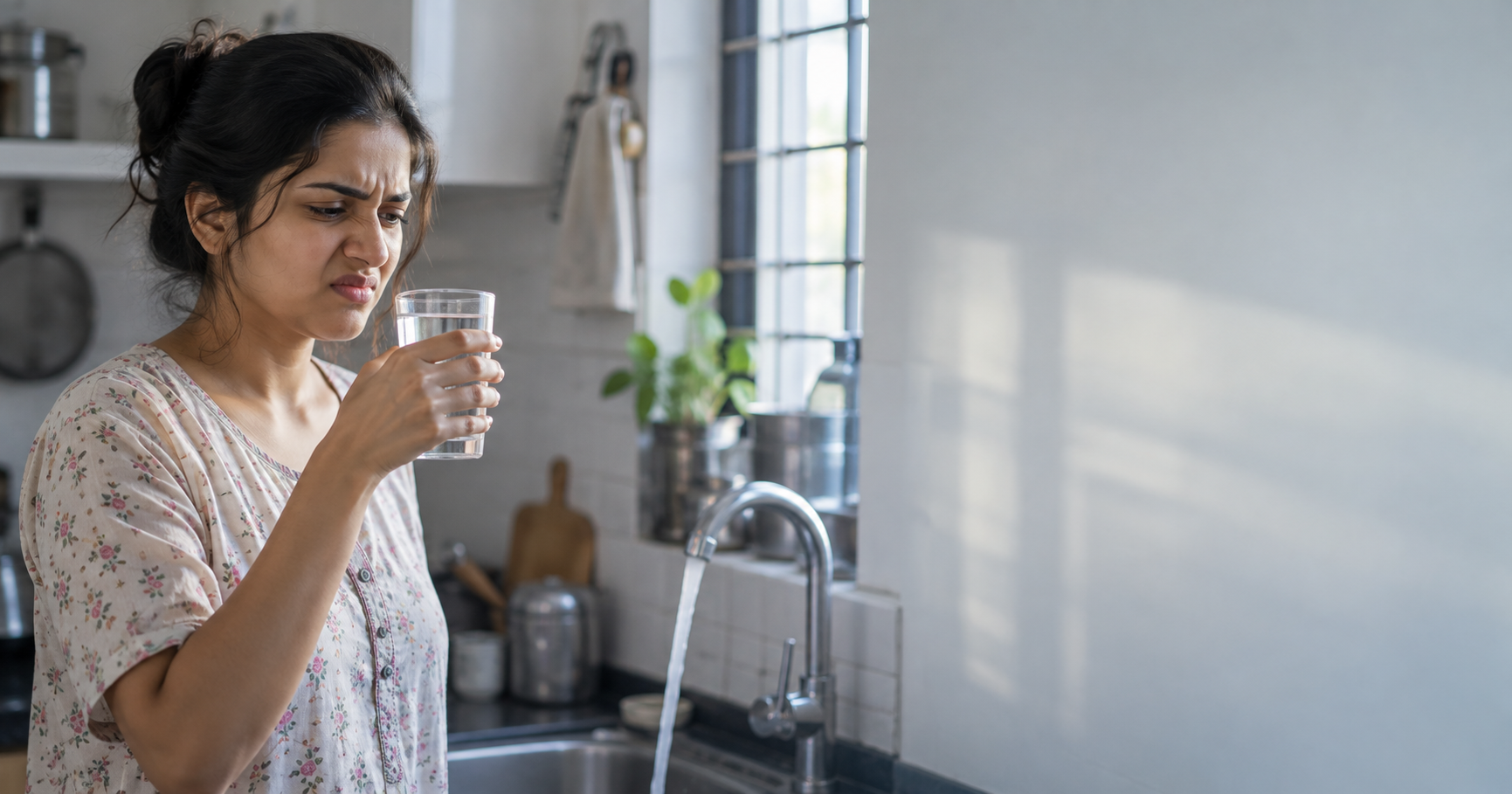
You open the tap at six in the morning and something smells. Rotten egg, maybe, or metal, mud or chlorine. Ten minutes later the same tap smells of nothing, and most people decide they imagined it.
They did not. The smell was real, and the fact that it disappears is the clue. The overnight pause is doing something to your water.
Why standing overnight changes the water
Through the night, nothing moves. Water sits in the pipes, the overhead tank and the geyser line for hours at room temperature.
Meanwhile, bacteria living on pipe and tank walls keep working. The gases they make build up with nowhere to go. And any metal in the system gets hours of contact with still water.
Morning is simply when you meet the result. Once the tap runs, fresh moving water replaces what stood overnight, and the smell goes with it. So the real question is where the water was standing.
Rotten egg or drain smell
This is usually hydrogen sulphide gas, mostly made by sulphate-reducing bacteria that grow where there is little oxygen: a borewell, a geyser tank, or a rarely-used line.
Sometimes the smell is not in the water at all. It comes from the drain, and you only notice it while the tap runs.
The honest home test: fill a glass, step outside the bathroom, and smell it away from any drain. If the glass has no smell, your water is fine and the problem is the drain trap.
If only hot water smells, suspect the geyser. Bacteria can settle in a warm tank overnight, and the metal rod inside many geysers can react with the water and make it worse.
Metallic or blood-like smell
This usually points to iron, and sometimes manganese. It is worse in the morning because the water has spent all night touching pipes, old fittings and the tank.
It rarely comes alone. Look for a brown or yellow tinge, orange stains in the sink, or yellowing on white clothes. Our guide to iron in water explains the cause and the fix.
Chlorine or swimming-pool smell
This comes from municipal disinfection. Water boards add chlorine to kill germs in the pipes. The smell is strongest right after supply arrives and your tank refills, which in many cities is early morning.
Chlorine is doing a job, so a light smell is not a warning. A carbon filter reduces it well, and even leaving water in an open jug for a few hours lets much of it escape.
One honest caution: a very strong chlorine smell that appears suddenly is worth reporting to your water supply body.
Musty, earthy or mud smell
This is usually the tank, not the source. Algae, sediment and slimy biofilm build up in sumps and overhead tanks, especially when a lid is left open.
Overnight, the water sits in contact with all of it. Cleaning matters, and so does how long water stays in the tank. See how long stored water stays safe.
Plastic or chemical smell
Look for something new: new pipes, a new tank, a new purifier, or a plastic container left in sunlight.
These smells usually fade over days to weeks as water flushes through. If it does not fade, something is wrong and the fitting should be checked.
Smell and what it means
| Smell | Likely cause | When it is worst | First thing to check |
|---|---|---|---|
| Rotten egg | Bacteria in borewell, geyser or unused line | First use, often hot water | Glass test; hot vs cold tap |
| Metallic | Iron or manganese, old pipes | First bucket after standing | Brown tinge, orange stains |
| Chlorine | Municipal disinfection | Right after the tank refills | Mild and usual, or sudden and strong |
| Musty or earthy | Algae and biofilm in the tank | Long standing, warm weather | Tank lid, last cleaning date |
| Plastic | New pipes, tank, purifier or container | First weeks after installation | What was recently changed |
| Sewage-like | Usually a dry drain trap; rarely a damaged supply line | When a drain has sat unused | Glass test; if the glass smells, stop drinking it |
The five-minute diagnosis anyone can do
- Run the tap for two minutes and smell again. If it is gone, the problem is standing water in pipes or tank, not a constant source problem.
- Compare cold tap and hot tap. Hot only means the geyser.
- Compare the kitchen tap, the bathroom tap and the tank outlet directly. All taps means the source or the tank. One tap only means that line or fitting.
- Fill a glass and smell it in another room. No smell in the glass means the drain, not the water.
- Ask a neighbour on the same supply. If they notice it too, suspect the source. If not, look inside your own building.
What actually fixes it
- Clean and disinfect the sump and overhead tank on a schedule, and keep lids closed.
- Flush rarely-used lines by running them for a few minutes.
- Service or flush the geyser if only hot water smells.
- Replace old galvanised pipe sections where practical.
- Use carbon filtration for chlorine and earthy smells.
- Treat for iron or sulphur when the source itself is the issue.
Boiling kills germs, but it does not remove iron or dissolved salts. See what boiling does not remove.
And be honest about purifiers. An RO does not fix a smell from the drain, the geyser or a dirty tank. It treats the water, not the plumbing. Our list of common water impurities shows what a purifier is for, and the RO vs UV vs UF buying guide helps you choose one.
When to stop guessing and test
Home checks tell you where to look, not what is in the water. Get it tested if you notice:
- A smell that lasts all day
- A smell with colour or stains
- A sudden change in taste
- Anyone in the house falling ill
Start with TDS, which is quick and cheap. Here is the best TDS level for drinking water. TDS will not show bacteria or sulphide, so follow it with a lab test for iron, sulphide and bacteria.
If the source water itself needs treatment, the LUXGEN Royale Copper is one RO+UV+UF option. We are happy to help you read your test first.
Bottom line
A morning smell is almost always about standing time, not a poisoned source. Find out where the water stood, and you have found the cause.