Why a Water Ioniser Needs a Purifier in Front of It in India

An ioniser changes water. It does not clean it. Those are two different jobs, and in India that distinction decides whether the machine lasts.
This post is for readers who already own an ioniser, or have decided to buy one. It explains why the machine needs treated water in front of it, and what the right order of equipment looks like in an Indian home. If you are still asking whether ionisers work at all, our post on ionisers, alkaline jars and structured water answers that, including the health questions.
What an ioniser actually does
Inside an ioniser is a set of metal plates, called electrodes. As water flows across them, the machine passes an electric current through it. This is electrolysis. It splits the incoming water into two streams: one more alkaline, which is the one you drink, and one more acidic.
That is the whole function: a change in pH, made by electricity. For reference, the Bureau of Indian Standards drinking water standard, IS 10500:2012, sets an acceptable pH range of 6.5 to 8.5.
What it does not do
An ioniser does not remove anything. It does not reduce TDS or hardness. It does not take out fluoride, nitrate or heavy metals. It does not trap sediment, and it does not remove bacteria.
Whatever goes in, comes out, just split into two streams. If the incoming water carries a contaminant, electrolysis does not take it away.
An ioniser is not a purifier and was never designed to be one. Our guide to common water impurities explains what these contaminants are and why they need removing.
Why Indian water makes this a bigger problem than elsewhere
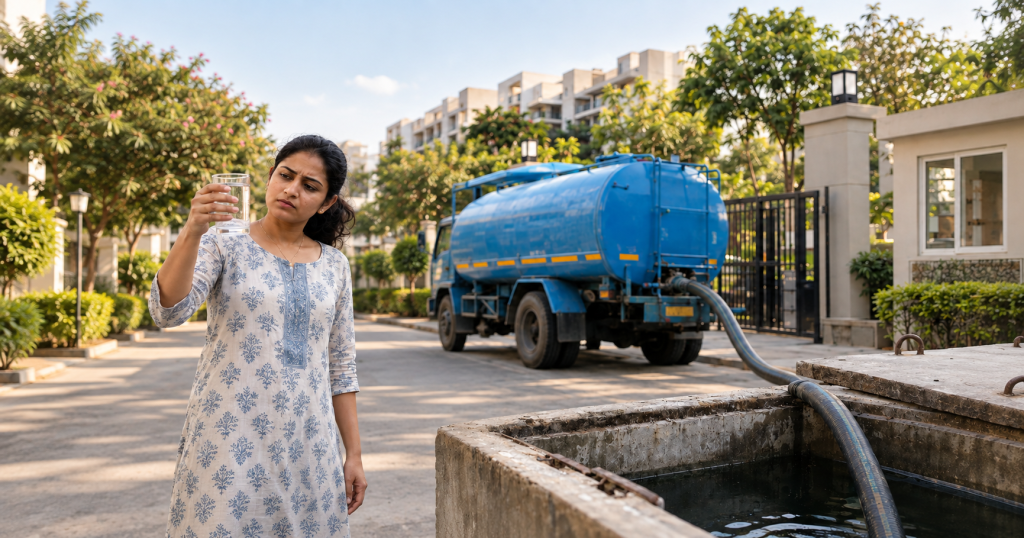
Many Indian homes depend on borewell or tanker water. That water commonly carries a high load of dissolved solids and a lot of hardness. It also changes. A borewell can give different water in summer and after the monsoon, and one tanker delivery may not match the next.
An ioniser fitted directly on that line is being fed water it cannot treat. Our guide to borewell water problems covers what such water usually contains. Only a test shows what is in yours, and our post on how to read a water test report explains the result line by line.
The scale problem
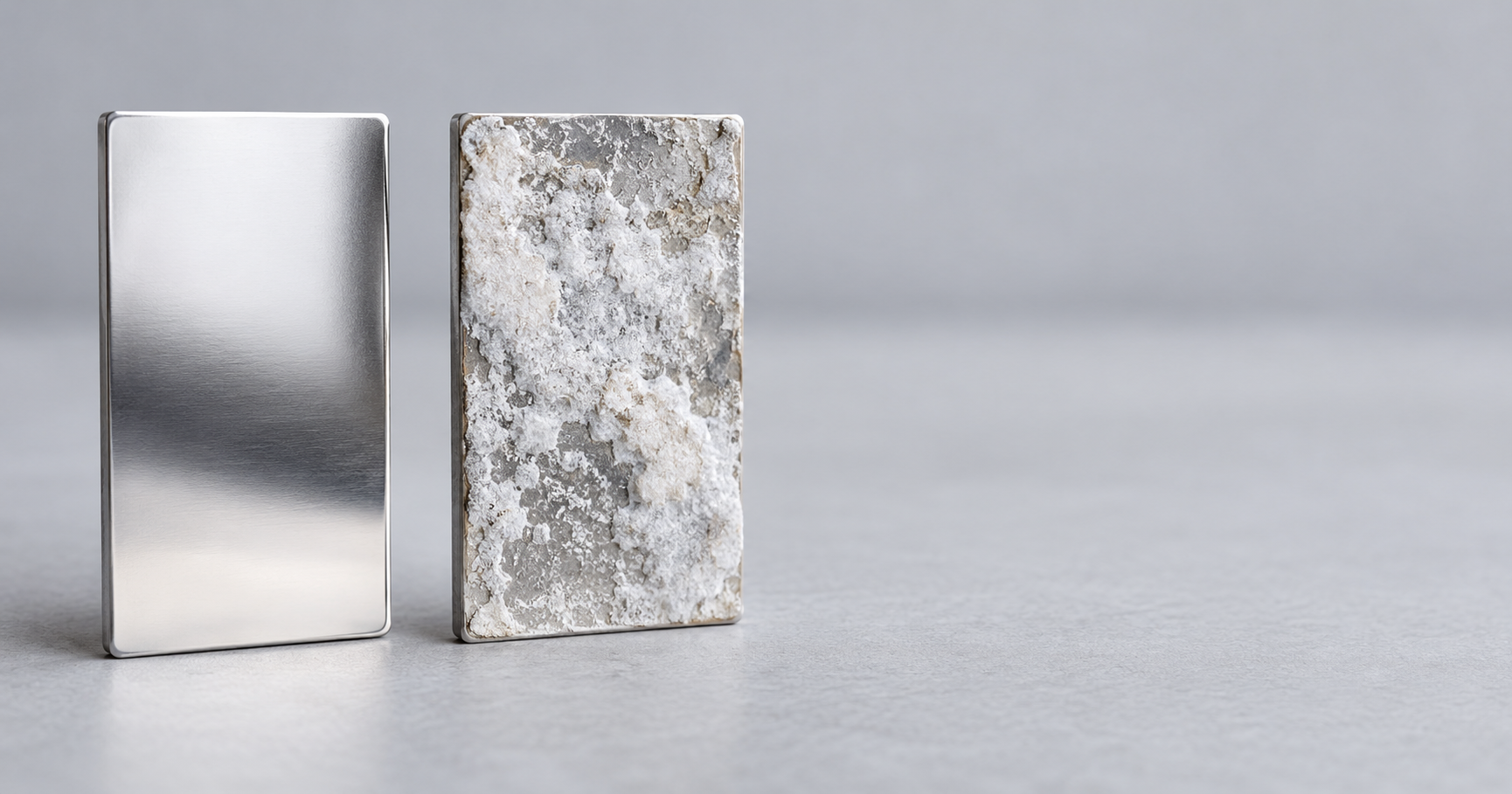
Hard water carries dissolved calcium and magnesium. When it runs across the electrode plates, those minerals deposit on the plate surface as scale. It is the same white crust you see inside a kettle.
A coated plate conducts less. The current has a harder time reaching the water, so performance drifts: the same setting no longer gives the same result. The machine works harder to do the same job.
Ionisers have cleaning cycles for this reason. Cleaning cycles help, but they do not undo hard water at the source. If all the water coming in is hard, the scale keeps arriving.
This is why manufacturers specify an inlet water quality for their machines. It describes the water the plates were designed to meet, and ignoring it is the main reason an expensive machine underperforms. Our guide to hard water problems and softeners explains hardness and how it is treated.
The opposite problem: water that is too pure
It would be easy to conclude that an ioniser should get the purest water possible. That is also wrong.
Electrolysis needs dissolved minerals to carry the current. Water with very low TDS conducts poorly, so an ioniser fed near-zero TDS water struggles to do its job.
This is why the sequence matters. Purify to a sensible mineral level, not to zero. Our guide to the best TDS level for drinking water explains that range, and our post on RO myths that are simply wrong deals with the belief that lower TDS is always better.
What each stage does
| Stage | What it removes or changes | What it does not do | Why its position matters |
|---|---|---|---|
| Sediment stage | Sand, silt, rust and other particles | Does not touch anything dissolved | Goes first, so particles do not clog the stages after it |
| Carbon stage | Chlorine, odour and bad taste | Does not reduce TDS or hardness | Sits before the membrane to protect it |
| RO membrane | Reduces most dissolved solids, including hardness, fluoride, nitrate and heavy metals | Does not set the final mineral level | Handles a high dissolved load, so it comes before anything scale can damage |
| UV or UF | UV deactivates bacteria and viruses; UF traps bacteria and fine particles | Neither reduces TDS or hardness | Used with RO or instead of it, depending on the test report |
| Ioniser | Splits water into a more alkaline and a more acidic stream | Does not remove any contaminant | Goes last, on water that is already treated |
The right order in an Indian home
Put together, the line looks like this:
- Sediment and carbon first. They protect everything that follows.
- Then RO, or UV and UF. The choice depends on what the test report shows. A high dissolved load or high hardness calls for RO. Low-TDS water with a germ risk can be handled by UV or UF.
- Then mineral return or a TDS controller. This puts the treated water in a sensible mineral range: enough minerals to taste right and to conduct, not enough to scale the plates quickly.
- The ioniser last.
Seen this way, the ioniser is the final taste-and-preference stage. It is not the treatment stage.
What to ask before buying an ioniser in India
Five questions, asked before you pay:
- What inlet water quality does this model specify?
- What happens to the warranty if my water does not meet it?
- Does it include any pre-filtration, or is that separate?
- How are the plates cleaned, and how often?
- What does a plate replacement involve?
A serious seller answers all five. If the answers are vague, treat that as an answer too.
And if you already own one
You do not need to replace it. Do three things, in this order.
First, get your water tested, and use our guide to reading a water test report to understand the result. Second, check that result against the inlet requirement in your ioniser’s manual. Third, if your water does not meet it, add pre-treatment ahead of the ioniser rather than replacing the ioniser.
The ioniser is doing what it was built to do. The water reaching it is what needs to change.
Bottom line
Purify first, ionise second. An ioniser on untreated Indian water is an expensive machine doing the one job it was never built for.
To choose the treatment stage, start with our RO vs UV vs UF buying guide. And if you are buying that stage from us, the LUXGEN Aura is an RO+UV+UF purifier with a built-in TDS controller that retains essential minerals, suitable for borewell, municipal and tanker water. Before pairing any purifier with an ioniser, check the ioniser’s inlet requirement first.