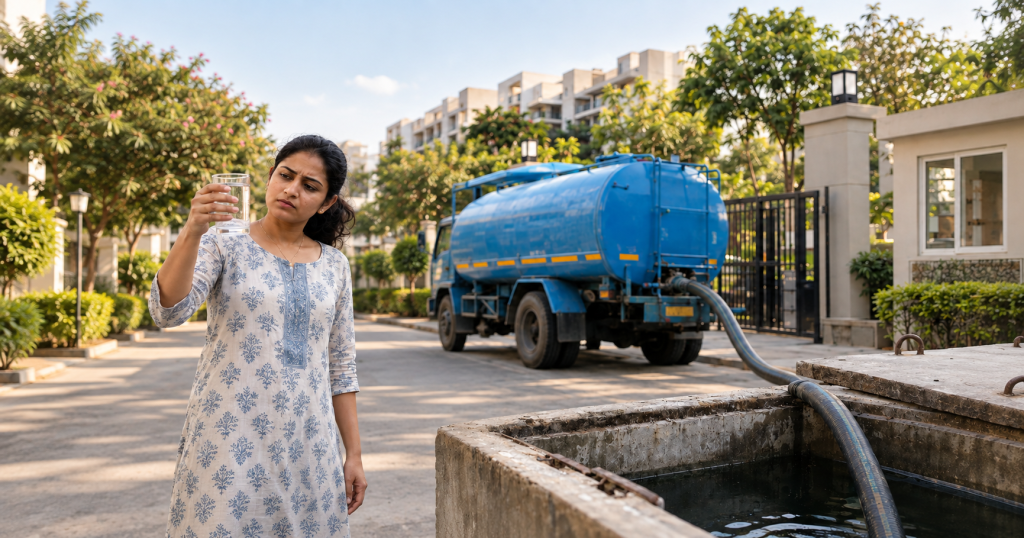
Ionisers, Alkaline Jars and Structured Water: Do They Actually Work?

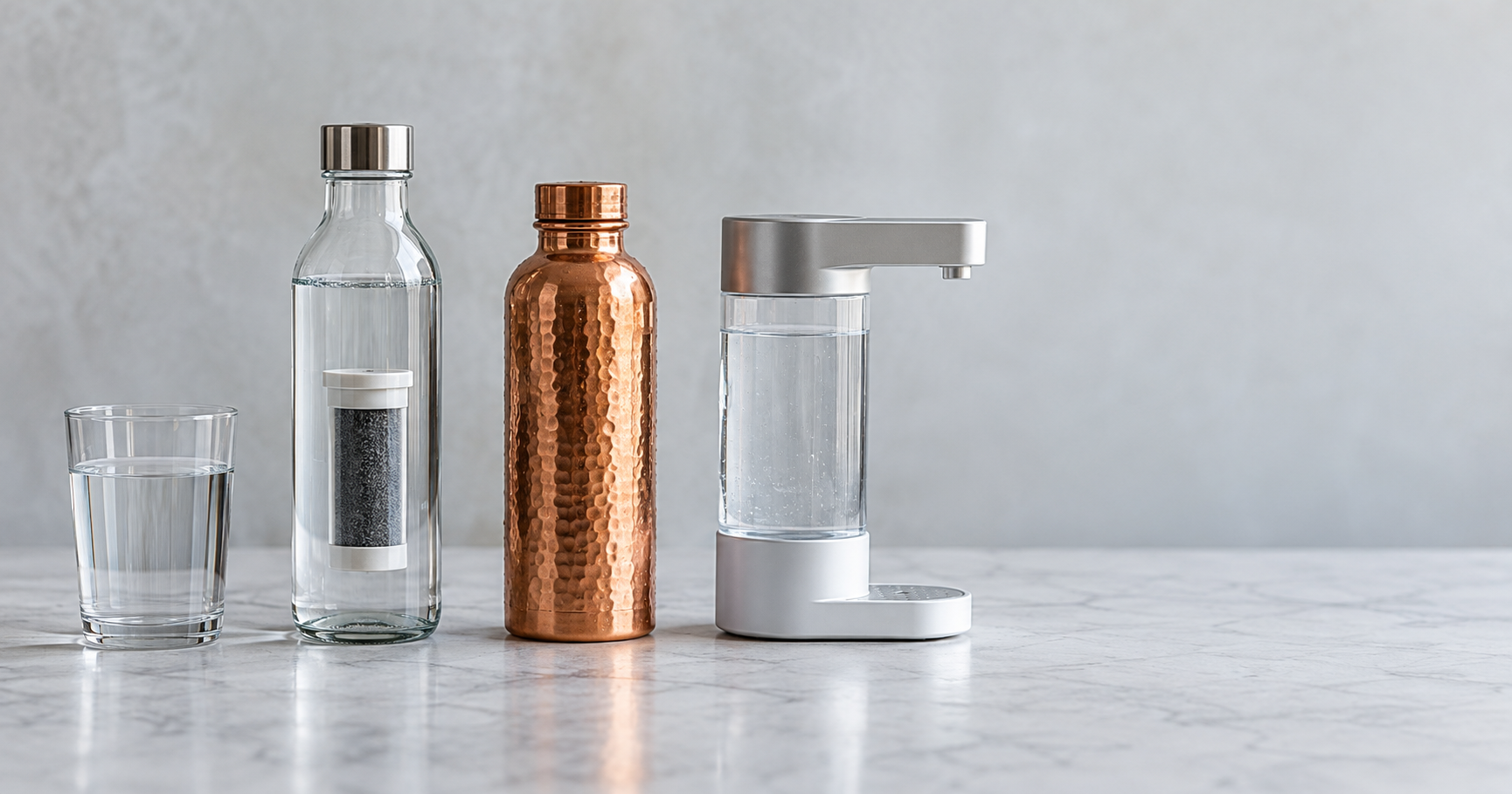
The ads are everywhere. Alkaline jars, hydrogen bottles, ioniser taps, copper pots, and magnetic devices that promise “structured” water. Some of these products do something real. Some do nothing measurable. A few are old household wisdom being resold at a new price. Here is where each one actually stands: what it does, what it does not, and where the evidence stops.
First, what your body already does with pH
Your blood stays within a narrow pH range all day, every day. The body holds it there using the lungs and the kidneys, and this control works regardless of what you drink.
Stomach acid is strongly acidic, so any drink meets that acid before anything is absorbed. Alkaline water does not pass through untouched.
This is why the idea of “alkalising the body” by drinking a particular water does not match how the body works. Blood pH is simply not a setting a drink can change, and there is nothing wrong with saying so plainly.
Alkaline water: what it is and what it is not
Alkaline water is simply water with a higher pH than neutral. That pH can come naturally from dissolved minerals, or be produced electrically by an ioniser, which we cover next.
For reference, the Bureau of Indian Standards drinking water standard, IS 10500:2012, sets an acceptable pH range of 6.5 to 8.5, with no relaxation. Most good drinking water already sits inside that range.
Here is the honest position. Some people find alkaline water tastes smoother, and taste is a perfectly good reason to prefer one water over another. The health claims that go beyond taste are where the evidence thins out.
Electric ionisers
An electric ioniser passes a current through the incoming water. Electrolysis splits it into two streams: one more alkaline, which is the stream you drink, and one more acidic. That is a real change, and the alkaline stream does have a higher pH.
What the process does not do is purify. Electrolysis does not remove TDS, fluoride, nitrate or bacteria. An ioniser is not a purifier. Our guide to common water impurities covers what needs removing, and how to read a water test report shows what is in yours.
So if your water needs treatment, an ioniser fitted after a proper purifier is a taste and preference choice. It is not a safety choice.
Alkaline jars and mineral cartridges
Alkaline jars, pitchers and the mineral cartridges fitted inside many RO purifiers work differently. They hold a mineral media that dissolves slowly into the water, adding minerals back. That raises the pH a little and, more importantly, changes the taste.
This is a real effect, and a modest one. It matters most for low-TDS water, which tastes flat. Moderate mineral content is what most people describe as good-tasting water, and our TDS guide explains that range. It is also why TDS controllers and mineral cartridges exist after RO: the membrane removes most dissolved minerals, and some are put back for taste. Our post on RO myths covers that in more detail.
Judged as a taste and mineral-content product, an alkaline jar does what it says.
Structured, hexagonal and magnetised water
Devices sold as “structuring”, “hexagonal” or “magnetised” water rest on one idea: that water can be arranged into a lasting ordered structure, and that this structure carries a benefit.
The difficulty is in the word lasting. In liquid water, the hydrogen bonds between molecules rearrange continuously. There is no accepted scientific basis for a structure of that kind surviving in the glass. The water from these devices is still ordinary water.
Copper vessels
Copper is different, because part of the claim is true. Copper has a mild antimicrobial effect on water stored in it. That is a real and very old observation.
What it does not do is make the water alkaline or “structured”. Those are separate claims, and the antimicrobial effect does not support them.
A few practical cautions apply. Do not store acidic drinks such as lemon water or juice in copper. Clean the vessel regularly. And remember that copper intake is not unlimited, so a copper pot is a storage vessel, not a supplement.
Hydrogen-rich water
Hydrogen-rich water, sold in bottles, tablets and dispensers, is an active area of research. Results so far are early and mixed. That means the honest statement is that the science is not settled. It is neither proven nor disproven, and we will not claim either.
Claim vs evidence
| The claim | Where the evidence stands | Practical takeaway |
|---|---|---|
| Alkaline water changes your body’s pH | Tightly controlled by the lungs and kidneys; stomach acid meets every drink first | Drink it for taste, not for pH |
| Ionisers purify water | Electrolysis splits water into alkaline and acidic streams; it removes no contaminants | Purify first; an ioniser is optional |
| Alkaline jars improve taste | Real, modest effect from added minerals, most noticeable in low-TDS water | A fair reason to buy one |
| Structured or hexagonal water | No accepted scientific basis; hydrogen bonds rearrange continuously | Not a reason to buy |
| Magnetised water | Same idea, same problem: no lasting structure exists | Not a reason to buy |
| Copper vessels are antimicrobial | Real, mild effect on stored water; unrelated to pH or structure | Fine for storage, with the usual cautions |
| Hydrogen water has health benefits | Active research, early and mixed results | Unsettled; no claim either way |
What actually decides whether your water is good
Two things decide whether your water is good to drink: what is dissolved in it, and whether it is free of contamination. Its pH badge is not on that list, as long as it sits in the normal range.
If the problem is high TDS, fluoride, nitrate or bacteria, no jar, pot or ioniser addresses it. Our post on high TDS and its effects and the RO vs UV vs UF buying guide cover what does. Our look at hard water and kidney stones is a good example of a health question where the useful answer turned out to be drinking enough water, not buying a device.
If you still want one
There is nothing wrong with wanting one. Just buy it for the reason it actually delivers, which is taste and mineral content, and treat the water for safety separately. A mineral cartridge after a purifier, or a copper pot for storage, is a reasonable choice for the right reason.
One plain note: this article is general information, not medical advice. Anyone with a health condition should speak to their doctor.
Bottom line
Test your water. Treat what the test shows. Then choose the taste you prefer. None of the devices above changes that order. If you want the safety step and the taste step in one unit, an RO+UV+UF purifier with a TDS controller and a copper cartridge after the purification stages, such as the LUXGEN Royale Copper, is built exactly that way.