Why Your Water Tastes Like Plastic After a New Installation

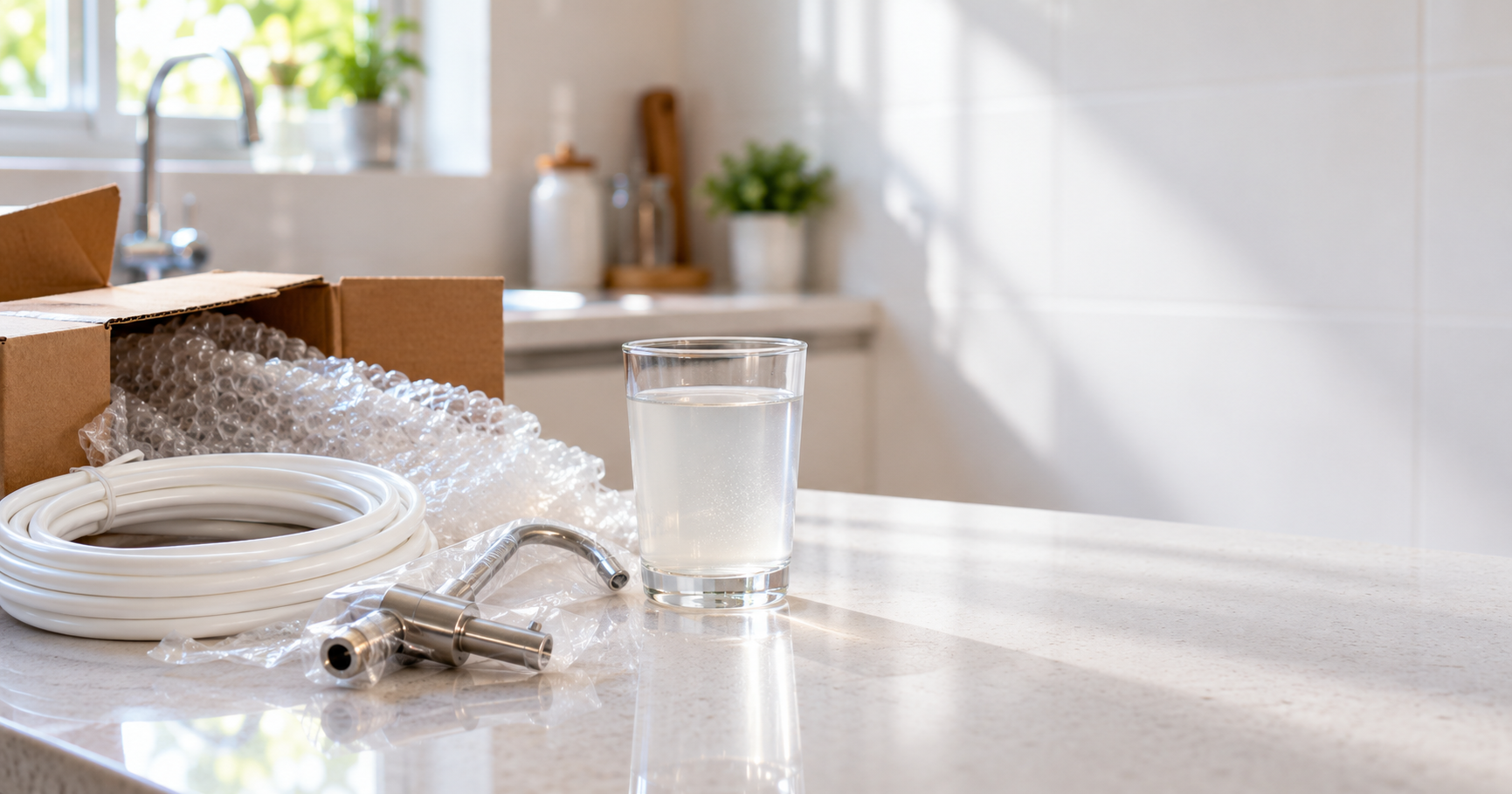
The purifier went in yesterday. This morning the first glass tastes faintly of plastic, and the natural first thought is that something is wrong with the machine.
Usually it is not. Almost everything new in a water line does this, and it almost always goes away. If your water tastes like plastic after a new installation, here is why, how to flush it out, and the few signs that mean you should call the installer instead.
Why anything new tastes of plastic at first
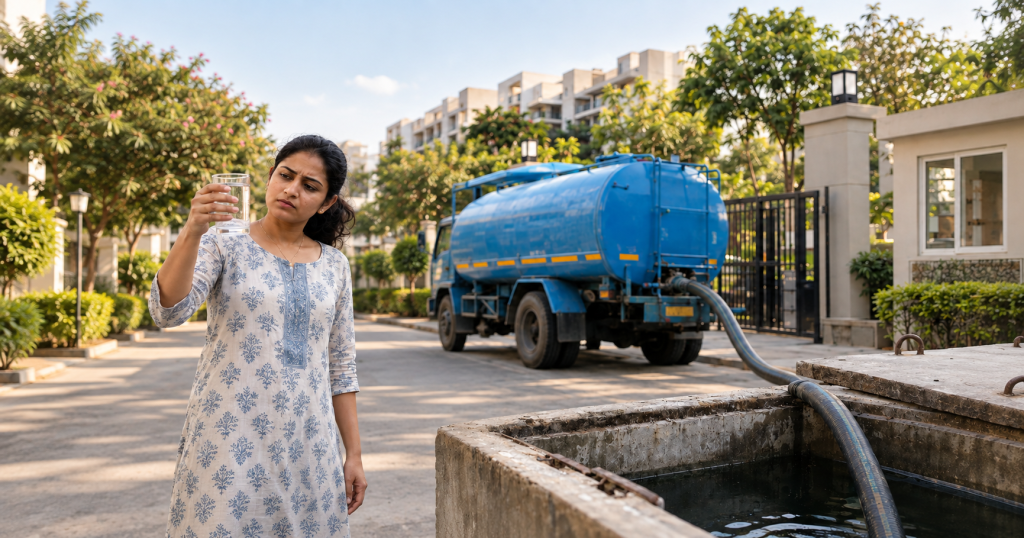
Every new part in the line is made of a material that releases a very small amount of its own odour into still water. The purifier’s internal tubing and storage tank do it. So does a new overhead tank or sump, new CPVC or PVC pipework, new fittings, and the new tap.
Water that sits inside a new part picks that odour up, and you taste it in the first glass. The effect is strongest on the first few fills and fades as the surfaces settle.
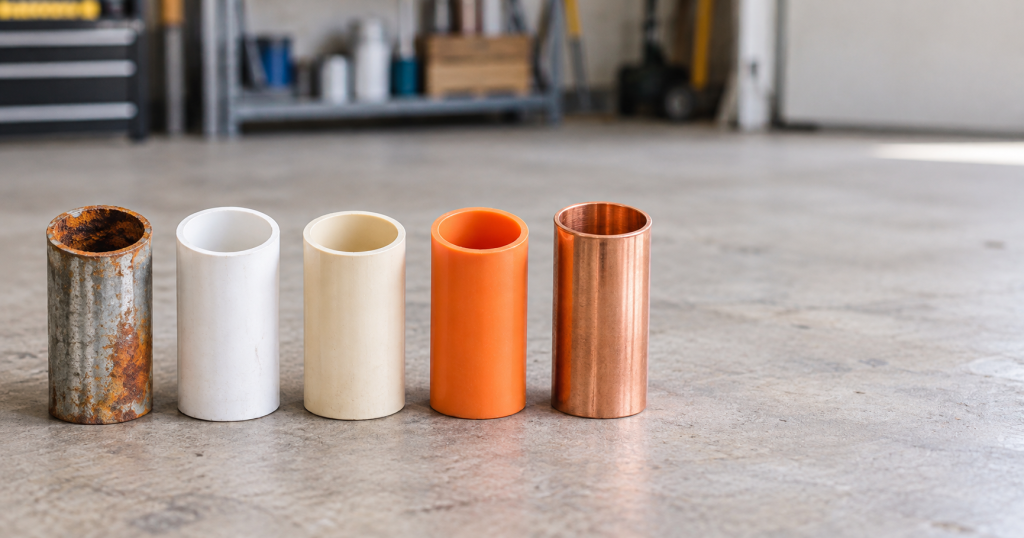
If pipes were replaced along with the purifier, our guide to CPVC, PVC, GI, PEX and copper pipes explains the differences between the materials.
The second cause nobody mentions: the carbon filter
A brand-new activated carbon filter sheds fine carbon dust on its first use. The first glasses can look slightly grey or taste odd, and the two often arrive together.
This is exactly why the manual tells you to discard the first few tank fills. People skip this step because it feels wasteful. It is not wasteful. It is the instruction, and the dust it clears is the main reason the instruction exists.
The third cause: the preservative rinse
RO membranes, and some other filters, are shipped with a storage solution inside them so they do not dry out or spoil while they sit in a warehouse. The first flush washes it out.
This is why a good installer runs the system and discards the water before you drink from it. If you were not there for the installation, ask whether they did. If nobody is sure, do the discard cycles yourself. Nothing is lost by flushing again.
What is normal and what is not
Normal is a faint plastic or chemical taste that is strongest in the first glass of the morning and clearly fading day by day. It should be gone within a few days to a couple of weeks.
Not normal looks different:
- A strong taste you cannot drink through.
- A taste that is not fading at all after a couple of weeks.
- A taste that appears suddenly on a system that was fine.
- Any visible discolouration or particles in the water.
The first list is a wait-it-out situation. The second list is an installer call. Do not keep flushing for weeks hoping it improves. Ask them to come and look.
Where the taste is coming from
| Source | What it tastes or looks like | How long it should last | What to do |
|---|---|---|---|
| New purifier tubing and tank | Faint plastic taste in the first glass | A few days | Discard the first fills as the manual says |
| New storage tank or sump | Plastic or cement-like taste at every tap | A few days to a couple of weeks | Wash and rinse before filling |
| New CPVC or PVC pipework | Mild chemical taste on the new line | Fades over a couple of weeks | Run the new taps a few minutes, several times a day |
| New carbon filter | Grey tint or odd taste in the first glasses | First few fills only | Discard them; it is the instruction |
| Membrane storage solution | Odd taste in the very first water | First flush only | Ask whether the installer ran and discarded it |
| New tap or fittings | Slight plastic or rubber taste at one tap | A few days | Run that tap more often than the others |
How to flush it out properly
- Do the full discard cycles. Fill and empty the tank the number of times the manual says. Do not stop at one fill because the water looks clear.
- Run new taps little and often. A few minutes several times a day moves more fresh water through a new line than one long run once.
- Use the discarded water. Mop with it, water the plants, flush the toilet. Nothing is wasted.
- Wash a new tank before filling. If an overhead tank or sump was installed, wash and rinse it first. Filling it straight away locks the taste in.
- Do not let the first fills stand overnight. Standing is what concentrates the taste. Our posts on how long stored water stays safe and why water smells only in the morning cover standing water.
Things that make it last longer than it should
A short list, and all four are avoidable.
- A tank or new pipe run left in direct sun, which warms the water and the material together.
- A system that was installed and then not used for days.
- Skipping the manufacturer’s discard cycles, or doing only one.
- An installer who connected everything but never ran it.
What it is not
It is not a sign that your TDS is wrong, or that the purifier is faulty. A TDS meter will not detect a taste like this, because taste and dissolved solids are different things. A new machine can read a perfect number on the meter and still taste of plastic for a few days. Our guide to the best TDS level for drinking water explains the number, and our list of RO myths that are simply wrong clears up what a purifier can and cannot do.
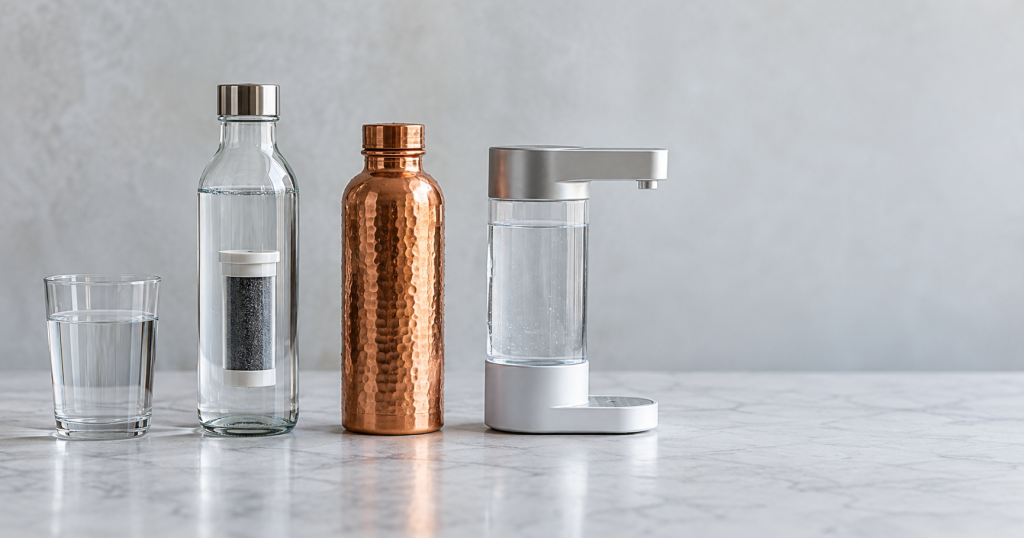
Bottles and containers have their own, smaller version of this. Our guide to plastic, steel and copper bottles explains why.
Questions to ask your installer
Four questions, and a good installer answers all four without hesitation.
- Did you run the system and discard the first fills before leaving?
- Was the storage tank washed before it was filled?
- How many discard cycles does this model need?
- When is the first service due, and what will it include?
If the answers are vague, ask for a revisit. It is a fair request on a brand-new installation.
Bottom line
A faint plastic taste on a new installation is the system breaking in, not breaking down. Flush it properly, give it a few days, and escalate to the installer if it is strong or not fading.
If you are still choosing a purifier, start with our RO vs UV vs UF buying guide. And if you are buying from us, the LUXGEN Royale Copper is an RO+UV+UF purifier with a TDS controller and a copper cartridge that adds minerals back after purification.