Why Your Skin Wrinkles in the Bath: It Is Not What You Think

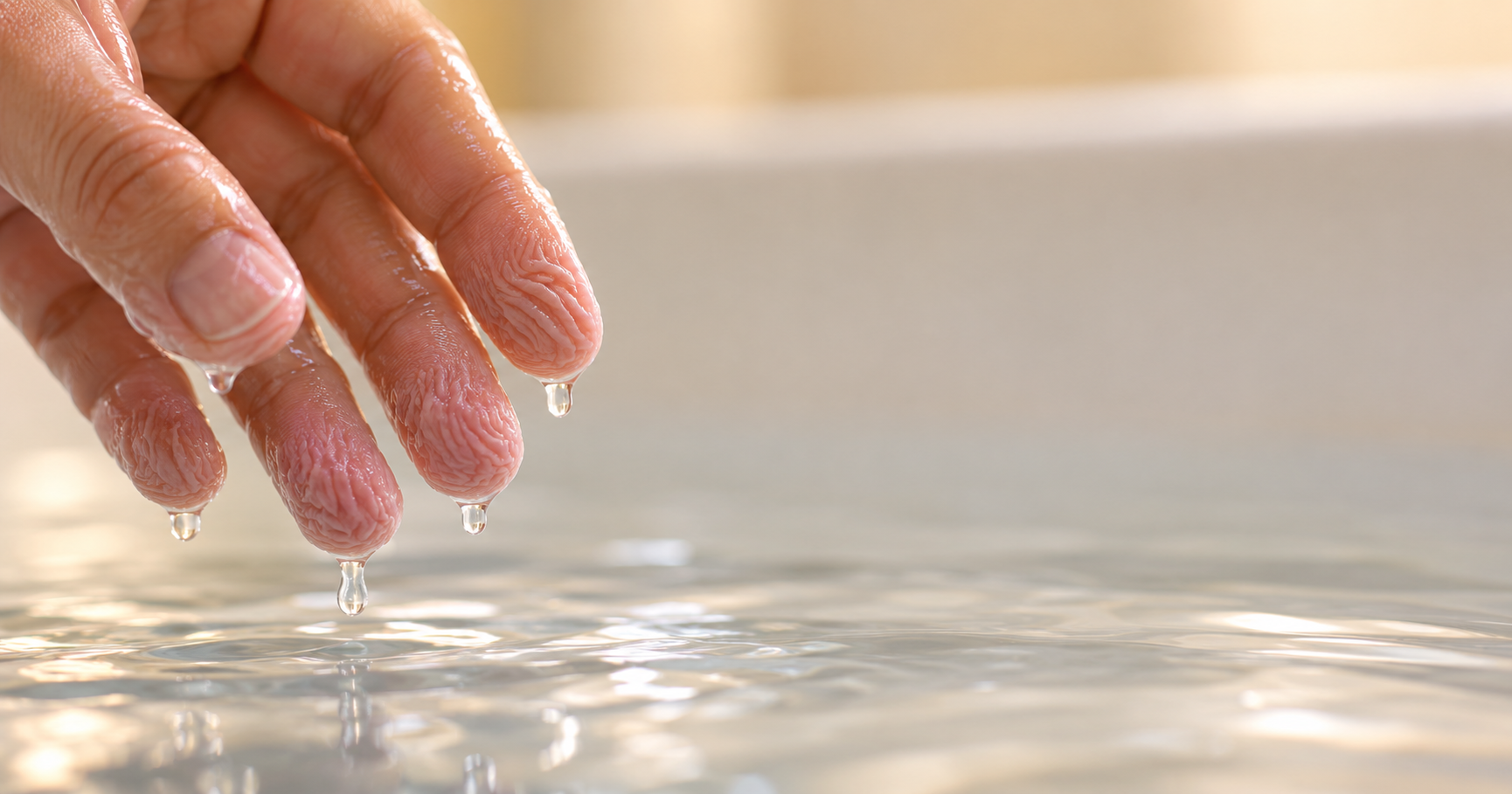
Every child asks it in the bath. Why do my fingers go wrinkly? And nearly every adult gives the same answer: the skin soaks up water. It sounds obvious. It is also wrong, and it has been known to be wrong since the 1930s. What actually happens is stranger, and a good deal more interesting.
The explanation everyone was taught
The textbook story is osmosis. The outer layer of your skin is made of dead cells. Sit in water long enough and those cells absorb it, swell, run out of room and buckle into ridges. Dry off and the ridges flatten out again. It is a tidy explanation, and it matches what you see. It is just not what happens.
The observation that broke it
In the 1930s it was noticed that people with nerve damage in a finger do not get wrinkles in that finger, however long it stays in the water. The fingers next to it wrinkle as normal. The damaged one stays smooth.
Passive soaking cannot explain that. The water has no way of knowing which fingers have working nerves, and dead cells absorb water whether or not a nerve is attached to them. So something active had to be going on underneath the skin.
What actually happens
The wrinkles are made by your nervous system. The sympathetic nervous system, the same unconscious network behind the fight-or-flight response, sends a signal to the small blood vessels under the skin of your fingertips. Those vessels narrow. With less blood in them, the volume inside the fingertip drops, and the skin above has nowhere to go but inward. It folds.
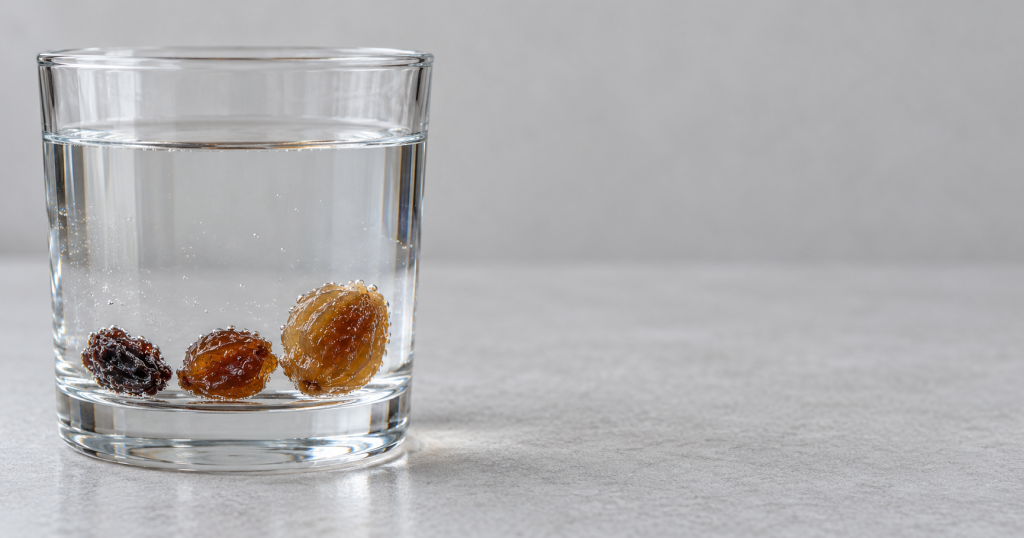
So the skin is not swelling. It is shrinking. Think of a grape turning into a raisin: the surface wrinkles because the inside has lost volume, not because the skin has gained any.
How the body even knows it is wet
Your fingertips are packed with sweat pores. Water reaching the skin through those pores appears to be the trigger that sets the reflex off. Exactly how that signal travels from the pores to the nerves and on to the blood vessels is still not fully understood. The outline is clear; the wiring is not.
Why only fingers and toes
Stay in the bath as long as you like and your arms, legs and back come out smooth. Only the fingers and toes wrinkle. If this were a side effect of wet skin, every patch should do it. Instead the body does it only in the places you use for gripping and standing. That is the clue that the wrinkling is a function with a job to do, not an accident.
The leading theory: tyre treads
The leading idea is that the wrinkles work like the tread on a tyre. A smooth tyre slides on a wet road because a film of water sits between rubber and road; tread channels that water away. Wrinkled fingertips may do the same, pushing water out from under the pad so skin can grip.
For our ancestors that would have meant a surer hold on wet food, stones and tools, and firmer footing on wet ground. But this is a hypothesis, not a settled fact. Tests of the idea have given mixed results, some finding a better grip on wet objects, others no difference. The question is still open.
The detail that surprises people
The pattern repeats. Look closely next time, and you will find the same finger tends to wrinkle in roughly the same arrangement every time it gets wet. That is because the folds follow the blood vessels underneath, and those vessels do not move much. The raisin is not random. It is a map of what lies below the surface.
Myth vs what actually happens
What most people believe, against what the reflex is really doing.
| The belief | What is actually true |
|---|---|
| Skin absorbs water and swells | Vessels under the fingertip narrow and the skin folds inward. It shrinks, it does not swell. |
| It happens to the whole body | Only fingers and toes. The rest of your skin stays smooth however long you soak. |
| It is a sign of over-soaking | A normal nerve reflex, not damage. Long soaking does affect the outer skin layer, but that is separate. |
| It happens to everyone equally | It depends on working nerves, and is reduced or absent where nerves are damaged. |
| Hard water or high TDS makes it worse | Neither makes any difference. The trigger is water reaching the sweat pores, not what is dissolved in it. |
Why doctors care about it
Because the reflex depends on working nerves, medicine has found a use for it. Putting the fingers in water and watching for wrinkles serves as a simple bedside indicator of nerve and autonomic function. Reduced or absent wrinkling is associated with nerve damage and with some conditions affecting the autonomic nervous system.
That is a fact about how the reflex is used in clinics, not a test to run on yourself in the bath. This is general information, not medical advice, and only a doctor can assess nerve function.
And no, it is not your water
We sell water purifiers and softeners, so this is the honest part. Hardness, TDS, chlorine or a purifier make no difference to the wrinkling reflex. It is nerves and blood vessels, not chemistry. Soft water, purified water and water at the ideal TDS level all wrinkle your fingers exactly the same way.
Two separate things are true, though. Prolonged soaking does break down the outer layer of skin, and that is a different effect from the reflex. And hard water genuinely does affect skin and hair, by leaving a film that dries them out. That is its own subject, covered in our post on what hard water does to skin and hair and our guide to hard water around the home.
Bottom line
The bath-time answer everyone gives is wrong. Your skin is not soaking water up. Your nervous system is pulling it in, perhaps to give you a better grip when things are wet. Water still matters to your body for the usual reasons, from staying hydrated for your immunity to drinking less in winter without noticing, just not for this one.
If you are choosing a purifier, start with our RO vs UV vs UF buying guide; the LUXGEN Royale Copper is one we stock.