Why Your Water Purifier Got Louder: What Each Noise Actually Means


A purifier that was quiet for a year and is now humming through the evening has not simply aged. Noise in these machines is mechanical and specific. Each sound points to a different part, and most of them are telling you something you can act on before it becomes a repair.
First, a baseline: every RO purifier makes some noise
No RO purifier is silent. The booster pump runs while the tank fills. A solenoid valve clicks when it opens and closes. Water moving through the tubes gurgles.
So the question is not whether your purifier makes noise. The question is whether the noise changed. If it has always sounded like this, it is probably normal. A sound that is new, louder, or lasting longer is the one worth your attention.
A pump that runs longer than it used to
This is the most common complaint, and the most useful early warning. The usual cause is reduced flow through the RO membrane. As the membrane scales up or fouls, less water gets through, so the pump works longer to fill the same tank. Low inlet pressure does the same thing.
A membrane that is choking also means the water quality is drifting. Scale comes from hardness, which our guide to hard water problems explains. If the taste has changed along with the sound, read our guide to the best TDS level for drinking water, then book a service.
A pump that never switches off
A pump should stop once the tank is full. If it never does, the usual reasons are a float or pressure switch that is not sensing a full tank, a leak somewhere in the line, or a membrane passing so little water that the tank never fills.
This one wastes water and runs the pump continuously. Switch the unit off at the socket and call the technician rather than leaving it running.
Loud humming or vibration
A loud hum is often not the pump itself getting louder. It is the pump passing its vibration into the wall bracket or the cabinet. This gets worse as mounting screws loosen, or as the rubber mounts under the pump harden. A unit mounted on a hollow partition wall amplifies it further.
The honest note: a technician can re-seat the pump mounts, but that means opening the unit. This is not a DIY job.
Gurgling and air sounds
Gurgling usually means air has entered the line. It is common after a break in the supply, after pump work, or when the inlet is drawing from a nearly empty tank. It usually settles once the line is full again.
A new installation behaves the same way. Expect unfamiliar sounds for the first days, alongside the taste we cover in our post on why water tastes of plastic after a new installation.
Knocking or banging in the pipes, not the machine
A sharp knock from the wall, just as the purifier stops filling, is not coming from the purifier. It is water hammer in the plumbing. The purifier’s solenoid valve shuts quickly, the moving water stops suddenly, and the pipes take the jolt.
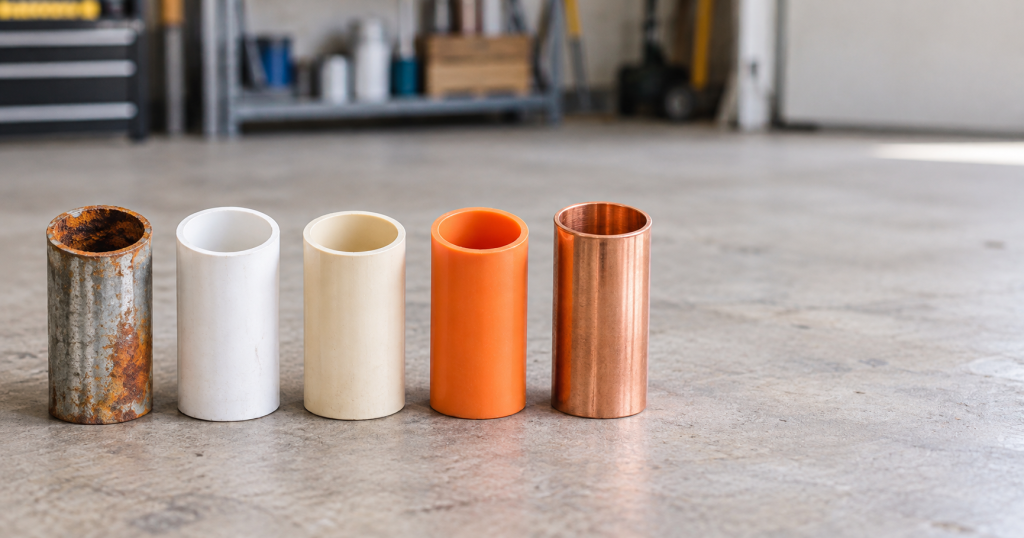
The machine is the trigger. The pipework is the cause. Our guide to water pipes in Indian homes explains the pipe materials behind your walls. The answer is a water hammer arrestor or a plumbing fix, not a new purifier.
A clicking that repeats every few seconds
One click when filling starts and one when it stops is normal. A click that repeats every few seconds is not. It is the solenoid valve or the pressure switch cycling because it cannot settle on a stable reading, often from low inlet pressure or a failing switch. This is a technician call.
Noise and cause
| Noise | Likely cause | Machine or plumbing? | What to do |
|---|---|---|---|
| Pump running longer | Scaled or fouled membrane, or low inlet pressure | Machine, sometimes the supply | Check the inlet tap, then book a service |
| Pump never stops | Switch fault, a leak, or a choked membrane | Machine | Switch off at the socket, call the technician |
| Loud humming or vibration | Loose screws, hardened pump mounts, hollow wall | Machine and its mounting | Technician re-seats the mounts |
| Gurgling | Air in the line | Supply | Wait for it to settle |
| Knocking in the pipes | Water hammer when the valve shuts | Plumbing | Plumber: arrestor or pipe fix |
| Repeated clicking | Low inlet pressure or a failing switch | Machine or supply | Call the technician |
| Grinding or screeching | Usually a failing pump | Machine | Switch off, call the technician |
What you can check yourself, safely
None of these checks need tools or involve opening anything.
- Is the inlet tap fully open? A half-closed tap starves the pump.
- Is the inlet line kinked or pinched? Look along the tube from the tap to the unit.
- Is the unit sitting flush against the wall, and is the bracket tight? A unit that rocks will hum.
- Has the supply pressure dropped across the whole house? If every tap is weaker, the purifier is not the problem.
- Has anything changed recently? A new tank, a new pump, or a switch to tanker water all change what reaches the machine.
Know your water before you blame the machine. Our guide on how to read a water test report shows what to look for.
What not to do
- Do not open the cabinet. Inside are live electrical parts and water under pressure.
- Do not adjust the pressure switch. A wrong setting creates new faults.
- Do not run the unit with a pump that will not stop.
- Do not ignore a grinding or screeching sound. It usually means a failing pump.
Safety first: if there is any smell of burning, visible water near the plug point, or a sparking sound, switch off at the socket and call the technician before anything else. If the socket itself is wet, do not touch it; use the main switch instead.
Why service intervals exist
Filters and membranes do not fail silently. They get louder first. A unit that is noisier than last year is usually a unit that is overdue.
This is the truth behind one of the beliefs in our post on RO myths that are simply wrong: that a purifier, once installed, is safe forever. It is only as good as its last service.
Bottom line
The noise changed because something in the machine changed. Note what the sound is and when it happens, and the technician will fix it in one visit instead of three.
If you are weighing a replacement instead, start with our RO vs UV vs UF buying guide. And if you are buying from us, the Avinya Onyx is a modular RO+UV purifier with auto flush to keep the RO membrane clean, and a front panel with indicators for tank-full, filter and flush, so its status is clear at a glance.