Water Pipes Explained: CPVC, PVC, GI, PEX and Copper for Indian Homes

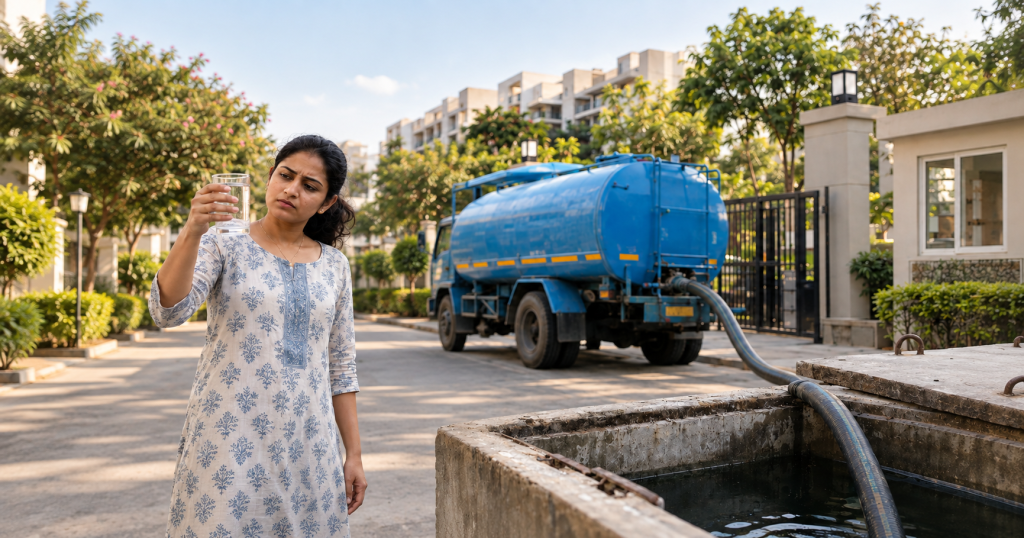
Most people choose a water purifier carefully and let the plumber choose the pipes. Yet the pipe is what your water sits inside every night. In an older house, the pipe is often the real reason the water tastes or looks wrong, not the borewell or the corporation line. It is one reason your neighbour’s water can be fine while yours is not. This guide compares the five common pipe materials in Indian homes and what each one does to your water.
Why the pipe matters at all
The answer is contact time. Water does not flow through your pipes all day. It stands in them overnight and between every use, sometimes for hours. A pipe that corrodes, scales or grows a slimy biofilm on its inner wall changes the water while it waits. That is why the first glass of the day is often the worst one, and why water smells odd first thing in the morning in so many homes.
GI: galvanised iron
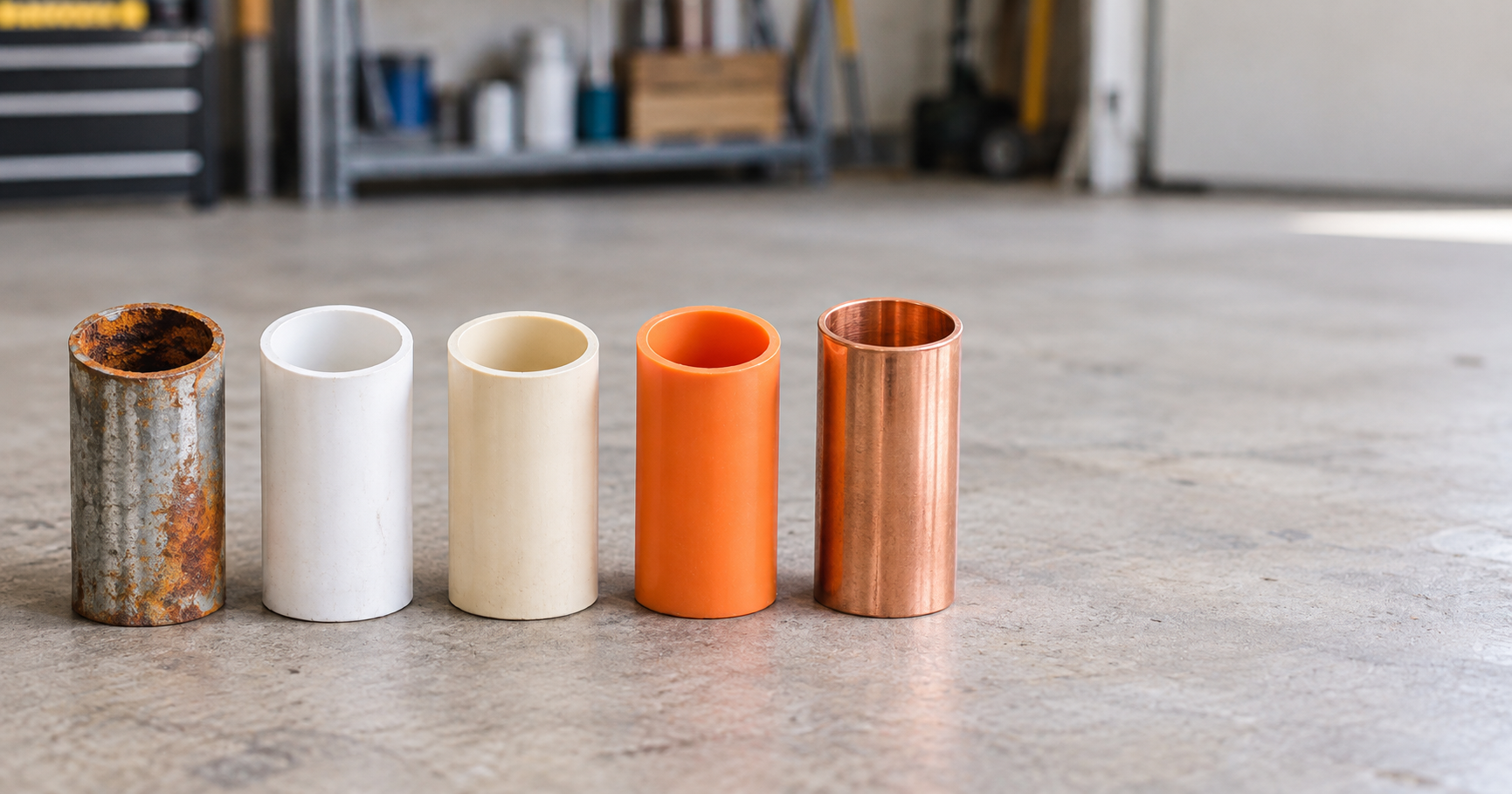
GI was the old default in Indian homes, and many older houses still run on it. It is strong and takes rough handling. The weak point is the zinc coating. It wears away with time, and the steel underneath then rusts from the inside, where nobody can see it.
The signs are easy to spot: brown or yellow water in the first flush, a metallic taste, scale that narrows the pipe, pressure that falls over the years, and rust-stained fittings. Our guide to iron in water and brown stains covers what that iron does. To say it plainly: if your house has its original GI pipe and the water runs brown in the morning, the pipe is a prime suspect, not the source.
PVC
PVC is light, cheap, easy to join and does not rust. It is a cold-water pipe only. Hot water softens it, so it belongs on drains, garden lines and the cold supply, never on the geyser line. One more caution: sunlight makes exposed PVC brittle over time, so pipe left out on a terrace or an outside wall should be covered or painted.
CPVC
CPVC is the common choice in Indian homes today. It handles both hot and cold water, it does not rust, and it does not scale the way metal does. The joints are solvent-welded, and the cost is reasonable.
It has downsides. It is rigid, so a run needs many elbows and fittings, and every fitting is a joint. Joints must be cleaned, primed and glued properly, or they weep months later inside a wall. CPVC can also crack if it is struck hard, or if a geyser thermostat fails badly and sends water far hotter than the pipe was meant to carry.
PEX
PEX is a flexible plastic tube that bends around corners. A single run can go from the riser to the tap with almost no joints in between, which means far fewer places to leak. It handles hot and cold water.
In India the downsides are practical rather than technical. PEX needs its own tools and crimp fittings, fewer plumbers are trained on it, and the material is not stocked everywhere. It must also be protected from sunlight and from rodents, which can chew through it.
Copper
Copper is long-lasting, handles heat well and naturally resists bacteria on its surface. It is the premium choice. The downsides: it is expensive, it needs skilled soldering, and acidic or low-pH water slowly corrodes it and leaches copper into the supply. That is one reason the pH line on a water test matters. Our guide to reading a water test report explains where to find it.
Pipe materials compared
| Pipe | Hot water | Main weakness | What it does to your water | Best use at home |
|---|---|---|---|---|
| GI | Yes | Rusts from the inside once the zinc wears | Brown first flush, metallic taste, falling pressure | Replace when you renovate |
| PVC | No | Softens with heat, brittle in sunlight | Little, if kept cold and shaded | Drains, garden, cold supply |
| CPVC | Yes | Rigid, many joints, cracks if struck | Little, if the joints are sound | Hot and cold supply |
| PEX | Yes | Needs special tools; sunlight and rodents | Little, and very few joints | Hot and cold, where the plumber knows it |
| Copper | Yes | Cost, skilled soldering, acidic water | Can leach copper if the water is acidic | Hot and cold with non-acidic water |
What hard water does to any pipe
Hard water scales. It leaves a chalky layer inside metal pipe and at fittings of every material, narrowing the bore and cutting pressure, and it hits geysers hardest because heat makes scale form faster. If your area has hard water, a softener protects plumbing, geysers and washing machines. Be clear about what it does not do. Softening is not a drinking-water fix on its own. It changes the hardness, not the overall TDS of the water.
Signs your pipes are the problem, not your water
- A brown or cloudy first flush that clears in a minute of running.
- A metallic taste from certain taps only, while other taps are fine.
- Pressure that dropped gradually over the years, not overnight.
- Rust or green stains at joints and fittings.
- A smell from one tap only.
Water from the source is the same at every tap. When the problem changes from tap to tap, or clears after a short run, the pipe between the tank and the tap is the likely cause.
If you are building or renovating
- CPVC for hot and cold supply is the sensible Indian default.
- PVC for drains, garden and cold-only lines.
- PEX if your plumber genuinely knows it and has the tools.
- Copper if the budget allows and your water is not acidic.
Keep the geyser line separate and correctly rated for hot water. And insist on proper joints. Most plumbing failures are joint failures, not material failures, so the quality of the work matters as much as the pipe you buy.
And the water you drink
No pipe makes bad water safe, and good pipe cannot fix high TDS, fluoride or nitrate. Those come from the source, and they need treatment, not plumbing. Test first, then treat. Our RO vs UV vs UF buying guide explains which technology fits which result. If the test points to high TDS, an RO+UV+UF purifier with a TDS controller, such as the LUXGEN Aura, treats the water at the point you drink it, whatever pipe it travelled through.
Bottom line
Choose the pipe for three things: hot water capability, joint quality and your water chemistry. In an old house, suspect the pipe before you blame the source. A brown first flush from a GI line is a plumbing problem with a plumbing fix.