Winter Water: Why You Drink Less Without Noticing, and Why It Matters

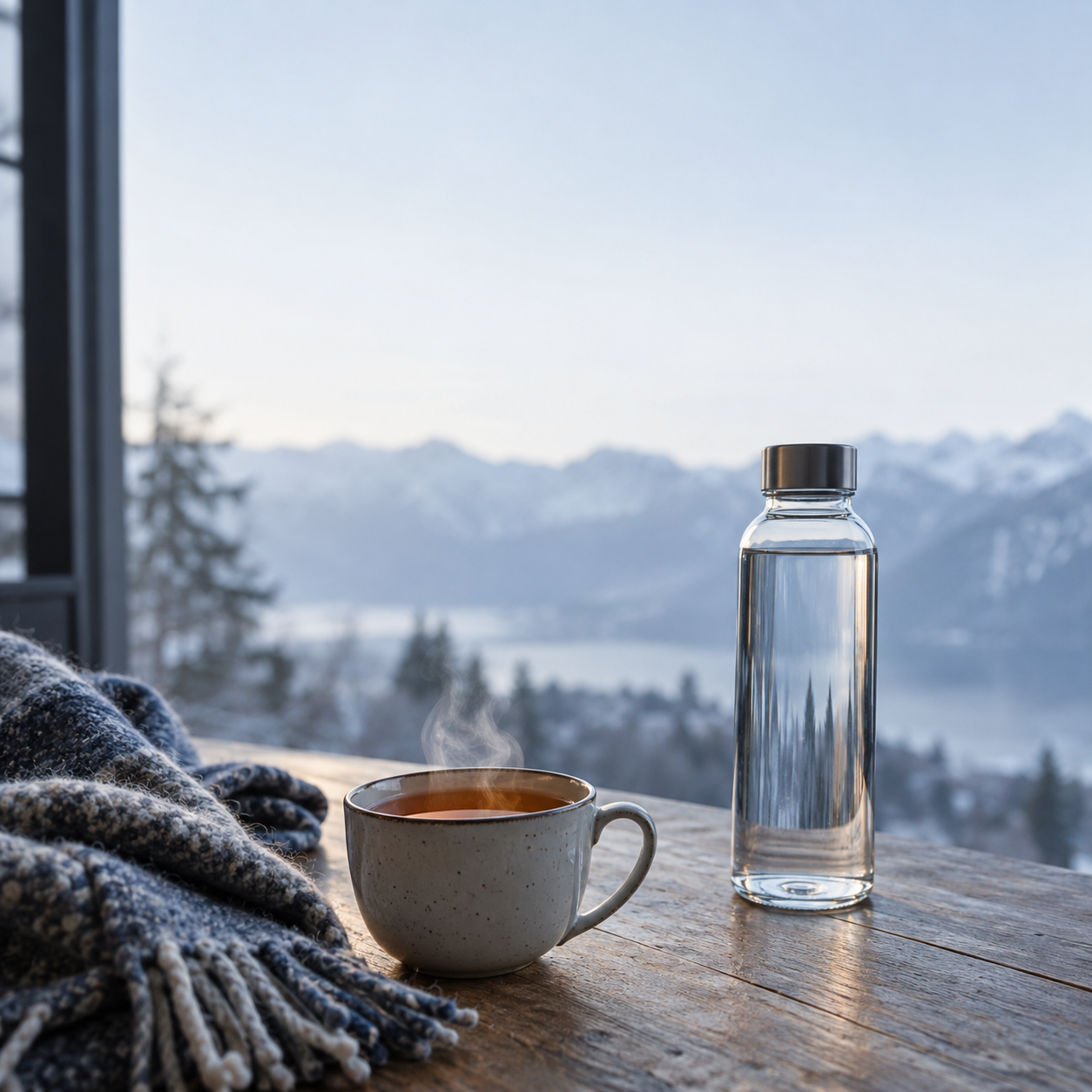
In Bengaluru and Hosur, the mornings start turning cold around now. In many homes, something small changes with them. The jug of water that used to be empty by lunch is still half full at night.
Nobody decides to drink less in winter. It just happens, quietly, over a few weeks. This post is not about forcing yourself to drink. It is about noticing what changed, and fixing it with a few easy habits.
Why thirst drops in the cold
The body’s thirst signal is weaker in cold weather. The need for water is still there, but the reminder is quieter.
Cold water is also simply less appealing than it is in April. In summer a cold glass is a relief. On a chilly morning it feels like a chore.
So you are not thirsty, and you do not drink. That is the whole mechanism, and it is exactly why the drop goes unnoticed.
But you are still losing water
The thirst goes quiet. The water loss does not. It carries on in four ways, and most of them are invisible.
- Breathing. The mist you see when you breathe out on a cold morning is water leaving your body. It leaves with every breath, whether you can see it or not.
- Dry air. Winter air is dry, indoors and outdoors, and it pulls moisture from your skin all day.
- Sweating under warm layers. Sweaters and jackets make you sweat. You never notice, because the sweat evaporates quickly.
- More frequent urination. Many people pass urine more often in the cold. That is water going out, with no thirst reminding you to replace it.
What mild winter dehydration feels like
It rarely feels like thirst. It feels like winter.
- Dry lips and dry skin
- A dull headache in the afternoon
- Tiredness that does not match your sleep
- Poor concentration
- Constipation
- Feeling colder than the temperature warrants
People usually blame the season for all of these rather than the water. Each of them can have other causes too, but low water intake is the easiest one to check first.
The winter habits that make it worse
- Tea and coffee take over. A hot cup replaces the glass of water, again and again through the day.
- Food gets heavier. Hot, heavy meals push out the water-rich fruit and salad of summer.
- Less time outdoors. Less activity means fewer natural water breaks.
- The bottle goes out of sight. Nobody is reaching for a cold drink, so the bottle leaves the desk and stays in the kitchen.
Winter water loss at a glance
| Winter water loss | What happens | What you notice | Simple fix |
|---|---|---|---|
| Breathing in cold air | Water leaves with every breath | Only the mist on a cold morning | A glass of water when you come indoors |
| Dry air on skin | Moisture is pulled from the skin | Dry lips and dry skin | Sip through the day, not only at meals |
| Sweating under warm layers | Sweat evaporates quickly | Almost nothing | Drink after a walk or workout, thirsty or not |
| More frequent urination | More water goes out than usual | Extra trips to the toilet | Check the colour and top up |
| Tea and coffee replacing water | Plain water drops out of the day | Many cups, an untouched bottle | Keep the cups, add a glass with each meal |
| Less water-rich food | Less water comes in through food | Heavier meals, less fruit | Add fruit or salad once a day |
Do tea and coffee count?
Honestly, yes. The fluid in them does contribute, so a cup of tea is not a zero. Nobody needs to give up their winter chai.
But tea and coffee cannot be the whole day’s intake. Replacing every glass of water with a cup of tea is the pattern that causes the problem. Keep the cups you enjoy, and keep plain water beside them.
The simple test that works all year
You do not need an app or a chart. Look at the colour of your urine. Pale means you are fine. Dark yellow means drink more.
This is more reliable than counting glasses, because your needs change with the weather, your body size and how active you are. A fixed number cannot follow those changes. The colour does.
The same rule applies on fasting days. Our fasting and hydration guide covers how to manage water around a fast.
Habits that actually work in winter
- Drink it warmer. Room temperature or slightly warm water goes down more easily than chilled.
- Keep the bottle visible. On the desk, where you can see it.
- A glass with every meal. It becomes automatic.
- Add a little flavour. Warm water with lemon or jeera helps when plain water feels unappealing.
- Eat water-rich foods. Fruit and salad bring water with them.
- Drink when you come in. One glass each time you come indoors from the cold.
Who needs to be more careful
- Older people, whose thirst signal is naturally weaker.
- Young children, who rarely stop playing to ask for water.
- Anyone who exercises in the cold, indoors or outdoors. You sweat more than you feel.
- Anyone prone to kidney stones, where low water intake is a major risk factor. Our post on hard water and kidney stones explains why.
One plain note: this article is general information, not medical advice. Anyone with a kidney, heart or other medical condition should follow their doctor’s advice on fluid intake.
And the water itself
Drinking more only helps if the water is good.
Winter is also when stored water sits longer in tanks, because the household uses less. So storage hygiene matters more in winter, not less. See how long stored water stays safe.
Keep a bottle you actually enjoy using, and clean it. Our guide to plastic, steel and copper bottles helps you choose one.
Test your TDS and know your source. Our TDS guide explains what the number means.
Immunity in the cold season is a separate subject, covered in our post on water and immunity.
Bottom line
In winter the thirst signal goes quiet, but the water loss does not. Do not count glasses. Watch the colour and build the habit.
If you are also choosing a purifier, start with our RO vs UV vs UF buying guide. And if you want purified water ready whenever you remember to drink, the LUXGEN Aura is an RO+UV+UF purifier with a built-in TDS controller that retains essential minerals and a 12-litre storage tank.