Gym Water Bottles: Plastic, Steel or Copper — What Actually Matters

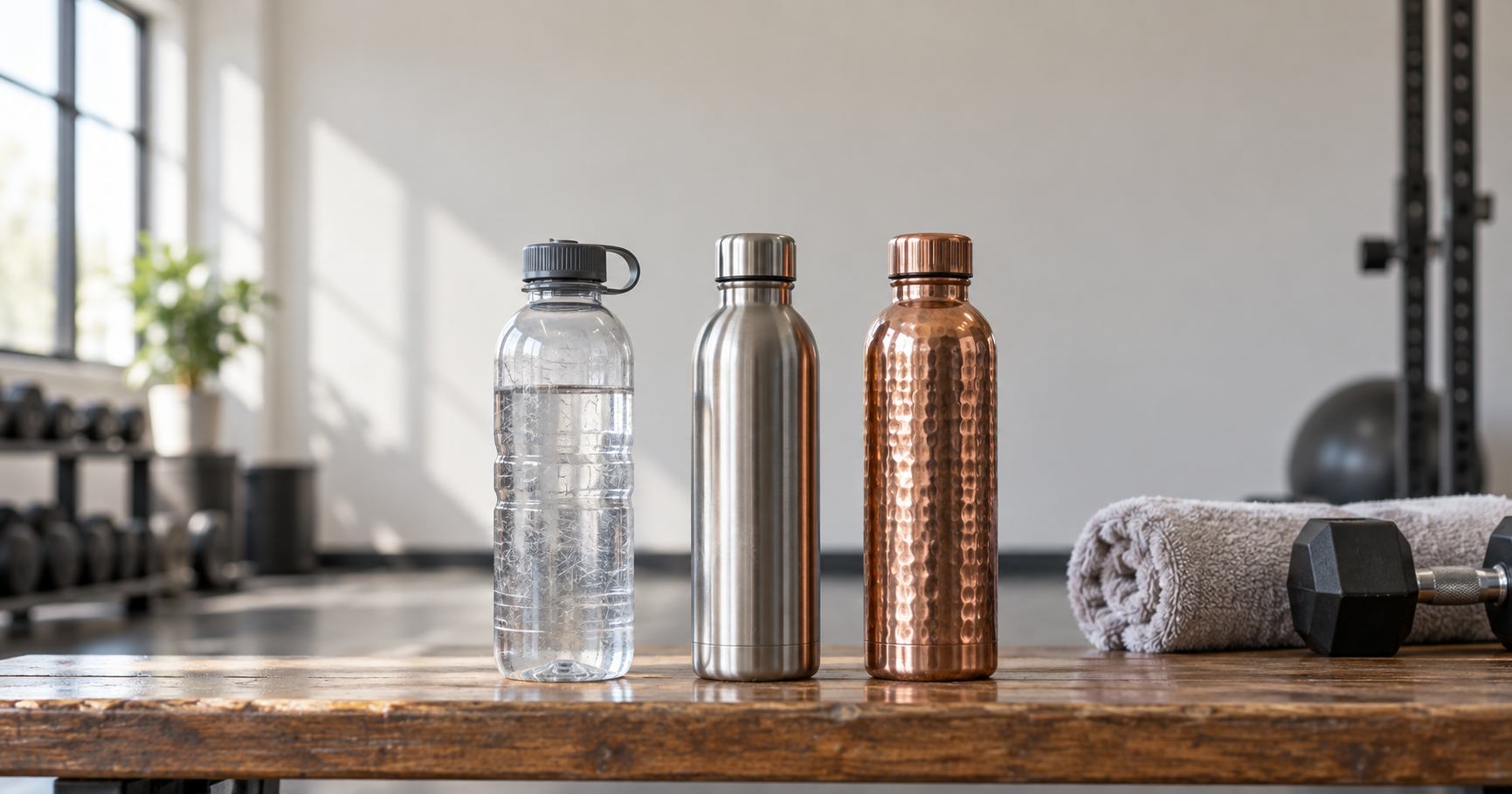
The gym water bottle debate never ends. One person says plastic is toxic. Another swears by copper because it is ayurvedic. A third says steel is the only safe choice. The argument is loud, and it mostly misses the point.
The bigger question is not what the bottle is made of. It is what is growing inside it after three days of refilling without a wash.
Plastic bottles
Plastic wins on convenience. It is light, cheap and it survives being dropped on a gym floor.
The downsides show up with time. Plastic scratches easily, and every scratch is a groove where biofilm can settle. Old plastic takes on smell and taste, so water starts to taste like the bottle. Heat is the real enemy: a bottle left in a hot car or filled with hot water can warp, and heated or worn plastic is more likely to leach.
To be plain about it: food-grade plastic used at normal temperature is not a poison. The problems are heat, age and cheap unlabelled plastic with no grade marking at all. Never use a plastic bottle for hot liquids, and retire it once it is scratched or smells.
Stainless steel bottles
Steel is the workhorse. It is durable, does not pass taste into the water and does not scratch the way plastic does. It handles hot and cold liquids, and an insulated double-wall bottle keeps water cold through a full workout.
It has costs. Steel is heavier, more expensive, and it dents when dropped. The weak point is not the body but the lid: the rubber gasket and the folding spout are where germs hide, because most people never take them apart.
Grade matters. 304 stainless steel is the standard food grade, and a decent bottle states it on the base or the box. Cheap unmarked steel can rust at the seams and around the lid.
Copper bottles
Copper has a long tradition in Indian homes, and there is something real behind it. Copper surfaces have a mild antimicrobial action, and plain water kept in a clean copper vessel for several hours picks up a little of that effect.
The limits deserve equal honesty. A copper bottle is not a purifier. Like boiling, it does not remove TDS, fluoride, nitrates or heavy metals, and it does nothing about chemical contamination. Our boiling vs RO post explains why killing germs and removing dissolved solids are two different jobs.
Copper also comes with rules. Do not store acidic drinks in it: no lemon water, no buttermilk, no juice, no electrolyte mix. Acid pulls copper into the drink quickly. Do not carry copper as an all-day bottle in the heat, sipping and refilling for hours. Clean it regularly with lemon and salt, or the inside turns green. And excess copper intake over months is not harmless, so more is not better.
The sensible use is plain water, a few hours in a clean copper vessel, mostly at home. Not a sports bottle you refill six times at the gym.
The thing that matters more than the material
Whatever the bottle, the real variable is how often you wash it, and whether you wash all of it. The lid, the gasket and the straw collect far more growth than the body.
Biofilm forms in days, not weeks. Drinking straight from the bottle puts mouth bacteria into the water. Topping up without emptying keeps the old water in circulation. A half-full bottle left overnight in a warm gym bag is close to ideal conditions for growth. Our post on how long stored water stays safe covers what happens to standing water, and the ice cubes and fridge water post shows the same problem in a different container.
A well-washed plastic bottle is safer than a copper bottle that has not been cleaned in a week.
Bottle material compared
| Material | Best for | Keeps taste clean | Heat safe | Cleaning effort | What to watch out for |
|---|---|---|---|---|---|
| Plastic | Light daily use, travel, kids | Fair; picks up smell over time | No; cold or room temperature only | Low, but scratches trap film | Heat, age, unmarked cheap plastic |
| Stainless steel | Gym, hot and cold drinks, long life | Yes | Yes | Low to medium; lid gasket weekly | Dents, unmarked steel that rusts, dirty lid |
| Copper | Plain water at home for a few hours | Slight metallic note | Avoid hot liquids | High; lemon and salt cleaning | Acidic drinks, all-day use, green build-up |
How to actually clean a bottle
- Empty and rinse after every use.
- Wash daily with warm soapy water and a bottle brush that reaches the bottom.
- Take the lid apart weekly. Pull out the gasket, open the spout, and scrub the straw with a thin brush.
- Dry fully upside down with the lid off. A damp, closed bottle grows smell fast.
- Deep clean when it smells. Soak with baking soda or diluted vinegar, then rinse well.
- Replace scratched plastic bottles and worn or cracked gaskets.
- Copper: rub the inside with lemon and salt, rinse thoroughly, and dry before the next fill.
What you fill it with still decides everything
A spotless bottle filled with unsafe water is still unsafe. The bottle does not fix the water, whatever it is made of.
So start with the source. Check your TDS level so you know what is dissolved in it, and read about the common impurities in Indian water that no bottle can touch. Fill from purified water at home, and be cautious about refilling from unknown taps or coolers at the gym.
Simple recommendation
- For the gym: an insulated stainless steel bottle, food-grade 304, with a lid you can fully take apart.
- Plastic: only if it is marked food grade, kept away from heat, and replaced the moment it scratches or smells.
- Copper: at home, plain water, a few hours at a time, never for lemon water or anything acidic.
If you are still deciding how to purify the water that goes into the bottle, our RO vs UV vs UF buying guide explains which technology suits which supply. For most Indian tap and borewell water, an RO purifier such as the LUXGEN Aura gives you purified water with enough minerals left for taste.
Bottom line
Plastic, steel or copper is a small decision. Pick steel for the gym and move on. The big decisions are how often you wash the bottle, lid and all, and what water you put into it. Get those two right and the material argument stops mattering.