Hard Water and Kidney Stones: What the Evidence Actually Says


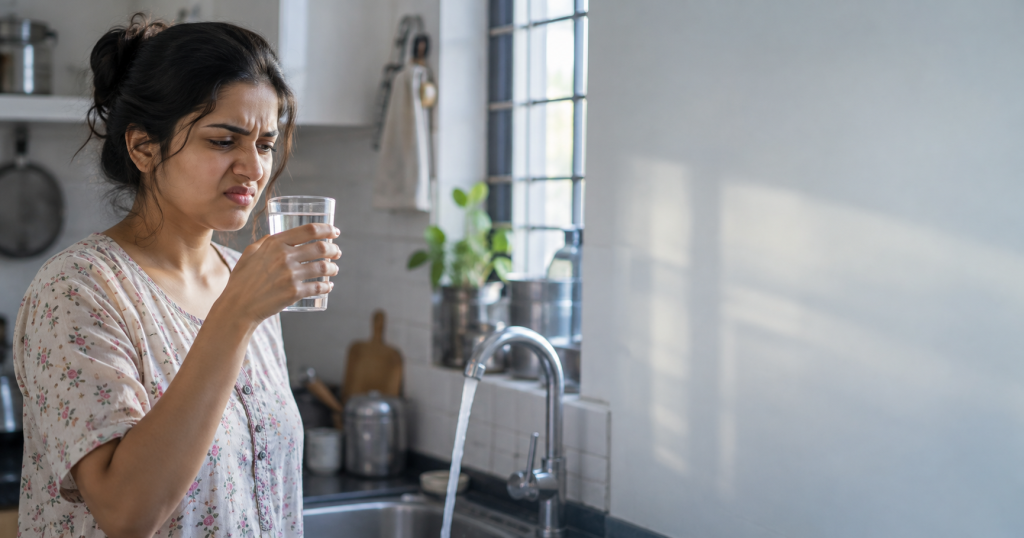
In the hard-water belts of Karnataka and Tamil Nadu, this is one of the most common questions we are asked: “our water is very hard — will it give me kidney stones?” It is a fair worry, given the scale hard water leaves on taps and in the kettle.
The honest answer, up front: hard water is not the main cause of kidney stones. The calcium in your water is a minor factor at most, and the research is genuinely mixed. What matters far more is how much water you drink, how much you sweat, and what you eat.
What kidney stones actually are
A kidney stone is a hard crystal that forms in the kidney from salts normally dissolved in urine. Around eight out of ten are calcium oxalate; the rest are calcium phosphate, uric acid or struvite.
The mechanism is simpler than most people expect. When urine becomes too concentrated, those salts pass the point where they stay dissolved and crystallise, and over months the crystals grow into a stone. What drives it is concentration — not how much calcium you take in, but how little water there is to carry it away.
Does the calcium in hard water cause them?
This is where people expect a clear yes. The research does not give one.
- Studies disagree. Large studies comparing hard-water and soft-water areas find no consistent link with stone formation — some report a slight association, several none, a few the other way. Results that scatter mean a weak effect.
- Calcium you swallow is not the same as calcium in a stone. Calcium in the gut binds oxalate from food, so it leaves in stool instead of reaching the kidneys. Cutting calcium out lets more oxalate through and can actually raise risk. Water calcium works the same way.
- Magnesium helps too. Hard water also carries magnesium, which binds oxalate and inhibits crystals in urine.
- Citrate is the body’s own defence. It coats early crystals and stops them growing. Low urinary citrate is a well-recognised risk that has nothing to do with hardness.
Put plainly: the evidence does not support the idea that hard water gives you stones. Hardness alone is a weak factor.
What actually raises stone risk
The factors that matter, roughly in order of impact:
- Not drinking enough water — the number one factor in India. Low intake concentrates urine, and concentrated urine is where stones form. This outweighs everything else here.
- Heat and sweating. Months of high temperatures pull litres out through skin alone — fluid not available to dilute urine, and why stone rates run high in hot regions.
- High salt intake. Excess sodium makes the kidneys push more calcium into urine — far more damaging here than hard water.
- High-oxalate foods in quantity — spinach, beetroot, nuts, excess tea — and a lot of animal protein, which raises uric acid and lowers protective citrate.
- Low urinary citrate, family history, and conditions such as gout, some bowel diseases and overactive parathyroid glands.
Where water does matter
Water matters enormously — but it is the volume that counts, not the hardness. Most guidance points to 2.5 to 3 litres a day for someone who has had stones, more in summer or outdoor work. The test needs no equipment: urine should stay pale straw-coloured through the day.
Quality plays a smaller role. Very high TDS water adds to your mineral and salt load, and where that TDS is largely sodium it works against you. If you do not know your number, start with the best TDS level for drinking water and what high TDS does to health.
Water factor vs effect on stone risk
| Water factor | Effect on stone risk | What to do |
|---|---|---|
| Low water intake | Strongest risk factor; concentrates urine | Drink through the day, not all at once |
| High water intake | Protective; the best-proven step there is | Aim for 2.5–3 litres; keep urine pale |
| Moderately hard water | Weak and uncertain; may even be mildly protective | No action needed for stone risk alone |
| Very high TDS water | Adds sodium load; may put you off drinking | Test TDS; treat if high or bad-tasting |
| Sodium in softened water | Unhelpful; raises calcium in urine | Do not use it for drinking |
| Magnesium and citrate | Protective; both inhibit crystals | Keep dietary magnesium; citrus adds citrate |
A note on softened water
People sometimes assume that if hard water is the suspect, a softener is the cure. It is not. An ion-exchange softener does not remove hardness so much as trade it: calcium and magnesium are swapped for sodium. You lose two minerals that bind oxalate and gain one that pushes calcium into urine, and high sodium is itself a recognised stone risk factor.
Softened water is meant for washing, bathing and appliances, where scale is the real enemy — see what hard water does to your home and whether you can drink softened water.
When RO helps
- Very high TDS, where RO brings the dissolved load down, sodium included.
- Borewell or tanker water, which varies between deliveries and can carry nitrate, iron or hardness no filter jug will touch — see borewell water problems in India.
- Water so hard or salty that people drink less of it. The most underrated benefit: if water tastes chalky the family drinks less, and low intake is the actual risk factor. Water that tastes good gets finished.
To be clear: an RO purifier is not a treatment for kidney stones and does not prevent them. What it can do is make water you will drink enough of. Our RO vs UV vs UF buying guide explains which technology suits which water.
Simple steps
- Test your water’s TDS and hardness so you have a number, not a guess.
- Drink enough that urine stays pale — the habit with the strongest evidence behind it.
- Cut excess salt. Pickles and packaged snacks matter more than your tap.
- Do not stop dietary calcium. It protects against the commonest kind of stone.
- See a doctor for flank pain, blood in urine, or a history of stones.
This is general information, not medical advice. Anyone with stone symptoms or a history of stones should see a doctor, who can test the stone type and urine chemistry.
Bottom line
Hard water is not the villain. It scales your geyser and shortens your washing machine’s life — real problems worth solving. But the evidence does not make it a meaningful cause of kidney stones, and cutting dietary calcium can backfire. Not drinking enough water is the real culprit. If you fix one thing after reading this, make it the amount you drink.
If taste or high TDS is why your household drinks too little, the LUXGEN Pura Plus 10L RO+UV+UF Copper Alkaline purifier handles high-TDS and borewell water and makes it pleasant to drink — which, in the end, is the point.