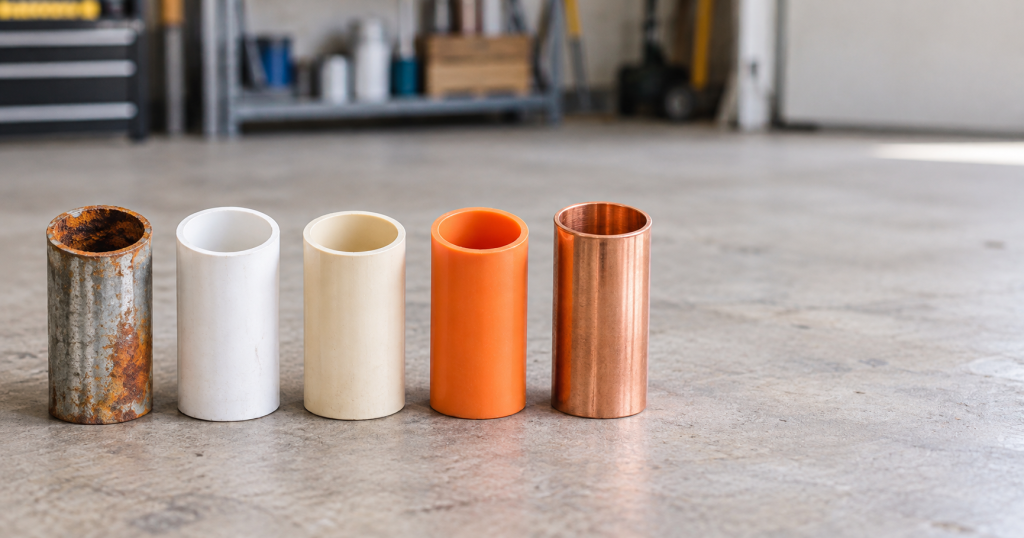
How India Drank Water in the 80s vs Today: What Changed and What Didn’t

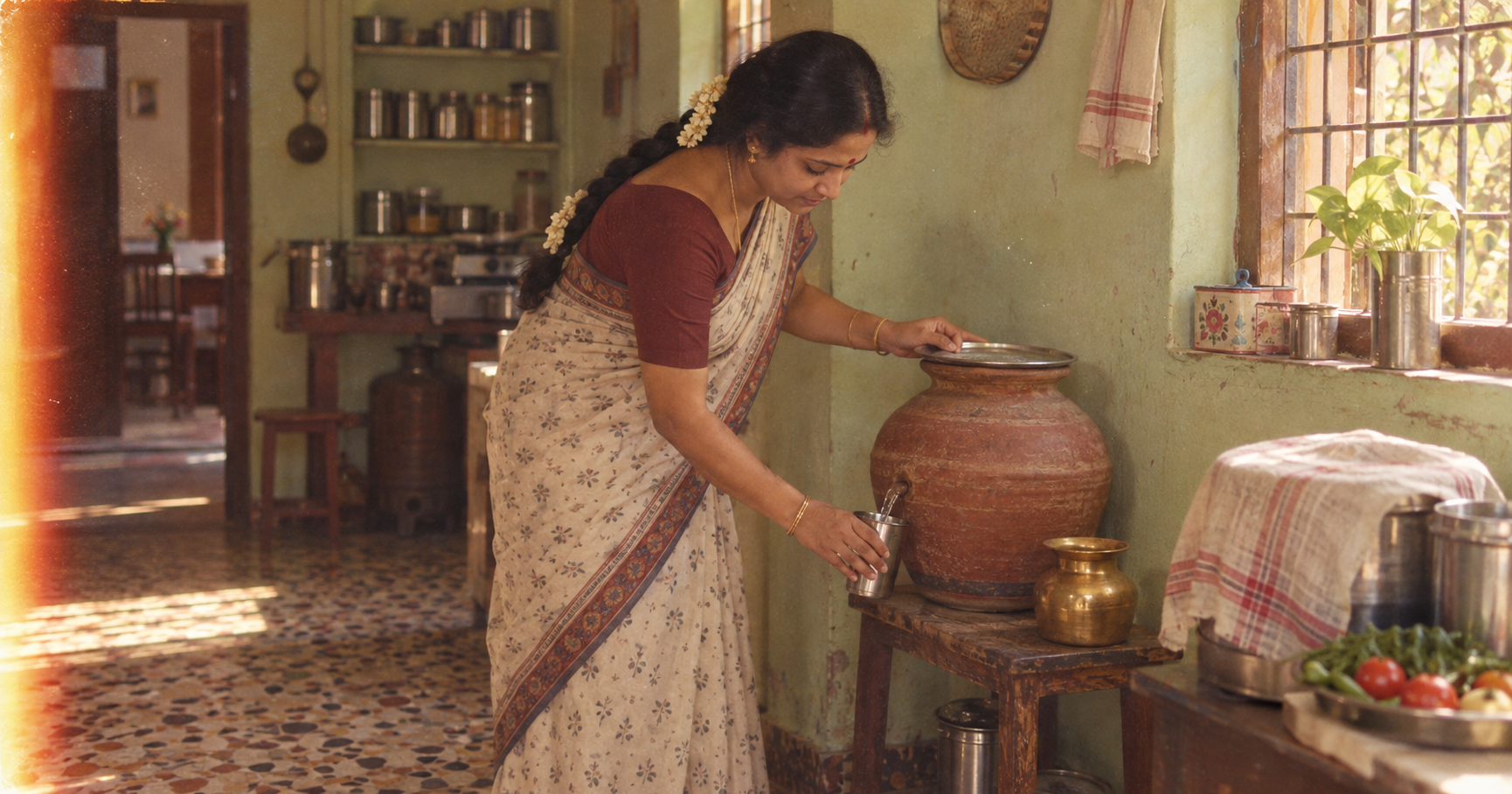
There was an earthen matka in the corner of the kitchen, always in the shade, sweating a little. Next to it, a steel lota. A square of cotton cloth tied over the storage pot. And on monsoon evenings, the whistle of water coming to the boil, then cooling all night before anyone could touch it.
Every Indian over 35 remembers this, and nearly every conversation about it ends the same way — “we drank that water and nothing happened to us, so why do we need a purifier now?”
It is a fair question, but the wrong one. The better question is not were the old ways better — it is has the water itself changed. Because it has, and that explains most of the difference.
What a 1980s Indian home actually did
The routine was remarkably consistent across the country:
- The matka or surahi — an unglazed earthen pot that cooled water by letting a little evaporate through the clay.
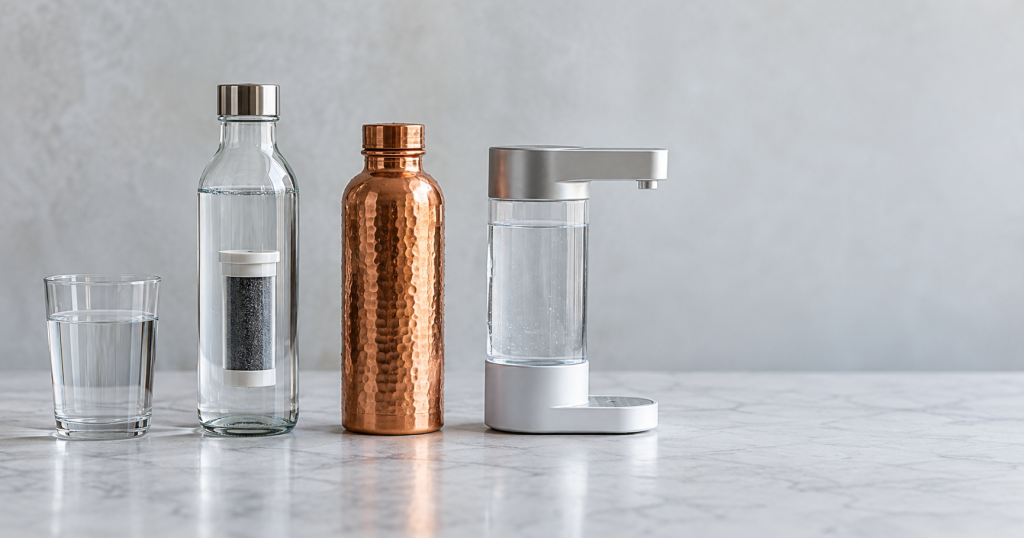
- Copper or brass vessels for storing drinking water, often kept overnight.
- Boiling, but selectively — during the monsoon, after a stomach illness in the house, or for a baby or an elderly person.
- Straining through cotton cloth, usually a folded piece of an old dhoti tied across the pot while filling.
- Overnight settling in a drum, then pouring off the clear water and leaving the sediment behind.
- A piece of phitkari (alum) swirled in to pull the muddiness down faster.
None of it was superstition — it was practical engineering with what was available.
What those methods genuinely did
They deserve honest credit, because several of them worked:
- Cloth straining removed what you could see — silt, insects, larvae, algae, grit. Where waterborne parasites like guinea worm were a problem, a fine cloth mattered a great deal.
- Boiling killed germs, and it still does. Bacteria, viruses and protozoa do not survive a rolling boil — still the most effective thing you can do without equipment. Its limits are covered in our guide on what boiling water does not remove.
- Copper has a mild antimicrobial effect. Water left in a clean copper vessel for hours does see some bacterial reduction — modest, not a disinfection method, but real.
- Settling and alum dropped the suspended load. Alum makes fine clay particles clump and sink, and clearer water is easier to disinfect, because germs sheltering in mud are harder to kill.
- The matka cooled water without electricity and the clay slightly softened the taste. On a 42°C afternoon, not a small thing.
What they could never do
Here is the limitation that matters: not one of those methods removed anything dissolved in the water.
Dissolved salts and chemicals — TDS, fluoride, nitrate, arsenic, pesticide residue, hardness — pass straight through every one of them. Boiling even concentrates them slightly, because the water leaves as steam and the salts stay behind.
In the 1980s that gap mattered far less: the water going into the matka did not carry much of that load, and the old methods matched the problems it actually had. Our guide to common water impurities lists what water can carry, and the best TDS level for drinking water explains the dissolved total.
What actually changed — the water, not the people
Our grandparents were not tougher. Their water was different, and it changed for reasons that have nothing to do with habits:
- Groundwater levels fell. As shallow wells and handpumps ran dry, borewells went deeper into older, more mineralised rock — generally harder, higher in TDS, and in several regions higher in fluoride. Our guide to borewell water problems in India covers what that means at the tap.
- Farming changed the chemistry. Decades of fertiliser use let nitrate leach down into the same aquifers people draw drinking water from.
- Industry and untreated waste added contaminants no household method of that era was designed for.
- Cities grew faster than their supply. Piped water could not keep up, so tankers, borewells and 20-litre cans filled the gap — sources that change from delivery to delivery.
So the water reaching an Indian kitchen today is often harder, higher in dissolved solids and more variable than the water that filled a matka in 1985. The method did not fail. The input changed.
Old method vs what it removed
| Method | Removes germs | Removes dissolved salts & metals | Still useful today |
|---|---|---|---|
| Cloth straining | Only larger organisms | No | Yes, on visibly dirty water |
| Boiling | Yes — bacteria, viruses, protozoa | No (slightly concentrates them) | Yes, especially after contamination |
| Copper vessel | Partly, over hours | No | Yes, if cleaned regularly |
| Alum and settling | Indirectly, by removing mud | No | Rarely needed on piped supply |
| Matka storage | No | No | Yes, for cooling without power |
| Modern RO purifier | Yes, with UV or UF | Yes — the only one here that does | Yes, where the TDS requires it |
The old habits worth keeping
Plenty of that discipline is still exactly right:
- Keep stored water covered. An open pot collects dust, insects and whatever is in the air.
- Clean the storage vessel often. Households scrubbed the matka every few days — a habit worth reviving, as our guide on how long stored water stays safe explains.
- Pour into a vessel rather than leaving water open in a jug for hours.
- Do not overuse plastic. Steel, copper and clay do not degrade in the sun the way a reused bottle does.
- Treat water as valuable. A generation that carried it in pots did not leave taps running.
The habits to retire
- Assuming clear water is safe water. Fluoride, nitrate and arsenic are invisible and tasteless.
- Boiling and calling it purified. Boiled water is disinfected, not purified.
- Reusing a can or jar without cleaning it. Biofilm builds up inside, and refilling does not remove it.
- Judging water by taste alone. Taste picks up some hardness and iron, and none of the contaminants that matter.
Where a purifier fits now
Not because our grandparents were wrong. They matched their method to their water, which is exactly the right instinct. The water changed, so the method must follow.
So do what they did — look at your source first. Test your TDS and hardness, then choose the technology from that number, not from an advertisement. Our RO vs UV vs UF buying guide covers which one suits which water.
If your supply is high-TDS, borewell or tanker-fed, the LUXGEN Royale Copper RO purifier handles that dissolved load and keeps copper in the process — the old idea, doing what it was always good at.
Bottom line
The matka generation was careful about water: they covered it, cleaned the vessel, strained what was dirty and boiled when it mattered. Those instincts still hold.
What no longer holds is that the same treatment is enough, because the water arriving in the house is not the water they were treating. Keep the discipline of the matka generation. Update the method for today’s water.