Cooking With Hard Water: What Happens to Your Rice, Dal and Tea

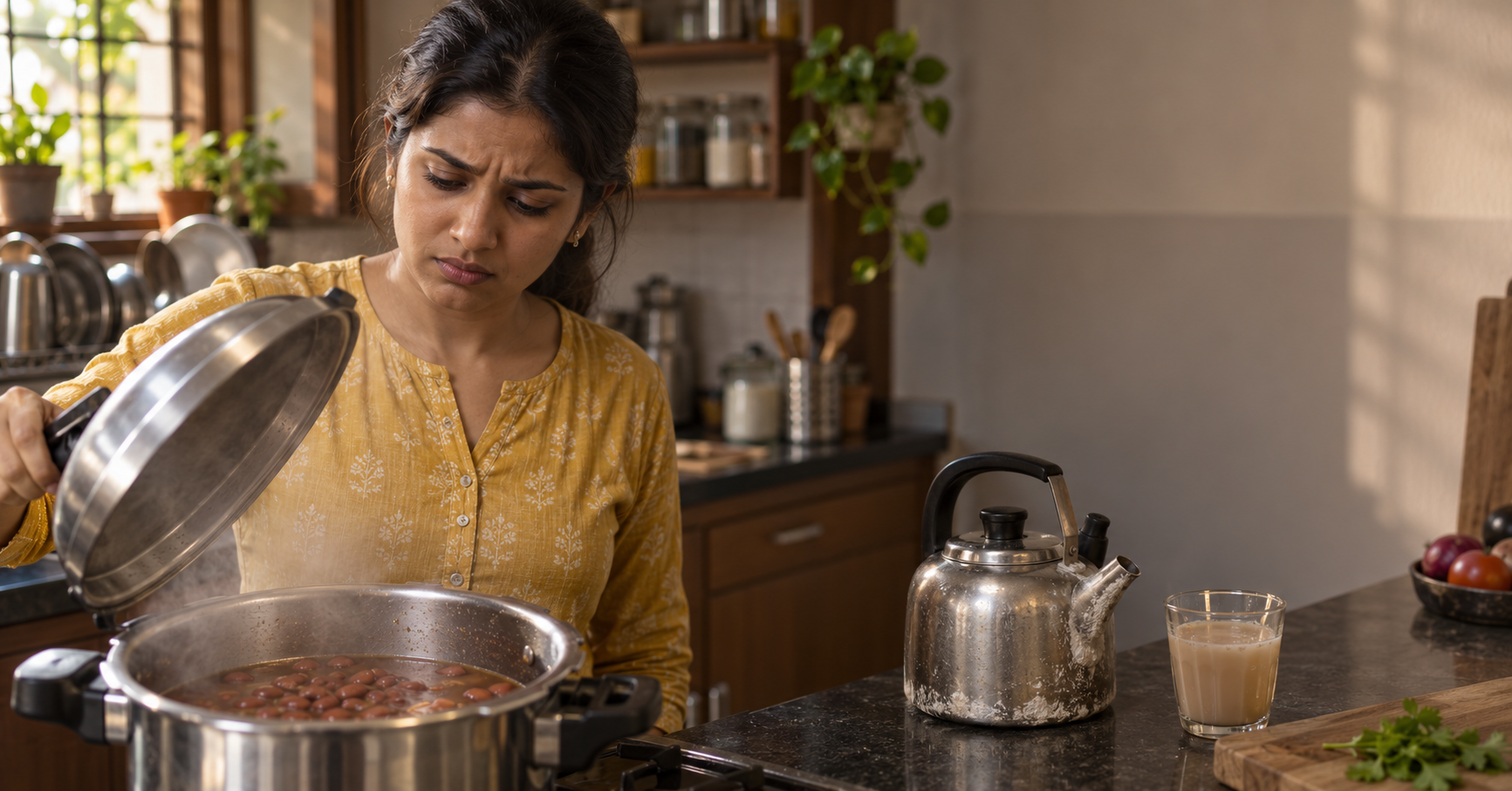
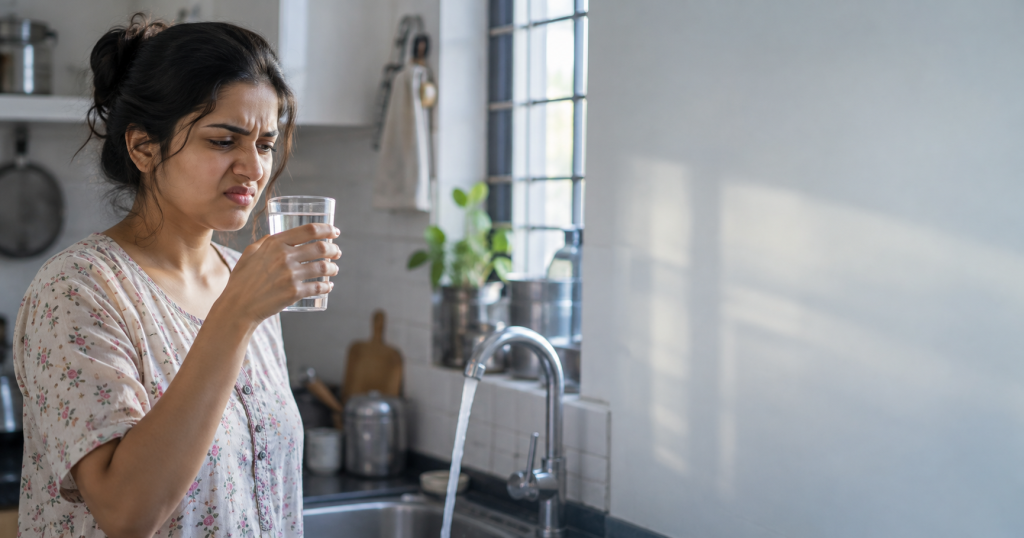
Some dal simply refuses to soften. Four whistles, then five, and the chana is still firm in the centre. The tea in the same kitchen looks dull and tastes flat. And inside the pressure cooker there is a white ring that scrubbing never quite removes.
Most people blame the dal, the gas or the tea brand. Often it is the water.
What hard water actually is
Hard water is water carrying a lot of dissolved calcium and magnesium. It picks them up from rock and soil, which is why borewell and other groundwater supplies are usually the hardest. You cannot see it and most people cannot taste it, but every pot, kettle and cup gets a dose of those minerals.
Hardness is one part of TDS, the total dissolved solids in water. Our guide to hard water problems covers the household side, and the best TDS level for drinking water explains the numbers. Calcium is also only one of the common impurities in Indian supplies, so hard water often brings company.
Dal and beans that never cook
Pulses soften when the skin and the starchy inside take up water and loosen. The skin is held together by pectin, a natural glue. Calcium in the water binds to that pectin and firms it up, so the grain resists both water and heat. The harder the water, the more it fights you.
Chana, rajma and whole moong suffer most because their skins are thick. Older stock is worse again, since it already cooks slowly.
- Soaking helps less than you expect. If the soaking water is hard, the skins are taking in calcium the whole time.
- A pinch of baking soda works, up to a point. It softens the skins, but too much flattens the taste and dulls the colour.
- Cooking in filtered or RO water is the cleaner fix. Take the calcium out and the dal behaves like it should.
Rice
Rice is less troubled than dal. Hard water can make rice cook a little unevenly, with some grains firmer or stickier depending on the variety, and mineral residue can dull the white a shade. If it is stubbornly firm, one test batch in purified water will tell you.
Tea and coffee
This is where most people notice. The colour and flavour of tea come from compounds that react with the minerals in hard water. The result is a brew that looks dull and cloudy instead of bright and clear, a thin film on the surface, and a flat, slightly bitter taste. Milk hides some of it, not all of it.
Coffee goes the same way: muted and chalky.
The fix is not zero-mineral water. Tea made in very low TDS water tastes thin and lifeless, because a little mineral content helps the flavour come through. The sweet spot for tea is moderate TDS, not zero.
The cooker, kettle and vessels
When hard water is heated, some of the dissolved calcium turns into solid scale. That is the white ring in the cooker, the chalky crust on the kettle base and the cloudy look on glasses that dried on the rack. Scale is a poor conductor of heat, so a scaled kettle takes longer to boil. Our hard water guide lists the other places it shows up around the house.
What hard water does in the kitchen
| In the kitchen | What you notice | Why it happens | What to do |
|---|---|---|---|
| Dal and rajma | Stays firm after extra whistles | Calcium firms the pectin in the skins | Soak and cook in purified water |
| Rice | Slightly uneven, firmer or stickier, duller white | Minerals change how grains take up water | Try purified water; the effect is small |
| Tea and coffee | Dull, cloudy brew with a film; flat taste | Minerals react with tea and coffee compounds | Moderate TDS water, not zero |
| Cooker and kettle | White ring, chalky base, slower boil | Heated calcium settles as scale | Use purified water; descale with vinegar or citric acid |
| Vessels and glasses | Streaks, spots, cloudy glass | Mineral residue left behind as water dries | Wipe dry; softened water is fine for washing |
| Vegetables while boiling | Beans and peas stay firm longer | The same calcium firming effect | Boil in purified water |
A quick way to check if it is your water
Cook the same dal twice, once in your normal water and once in purified water, same quantity, same whistles. If the second batch is clearly softer, you have your answer. Then look inside the kettle: heavy white scale means hard water.
For a number, use a TDS meter. It answers the question in seconds. If the reading is high, high TDS has effects beyond the kitchen, and our TDS guide explains what the number means.
What NOT to do
- Do not cook with softened water. A softener swaps calcium for sodium. Good for skin and appliances, but food cooked in it picks up salt, and softened water is not meant for drinking or cooking. Our post on whether you can drink softened water covers this in detail.
- Do not overdo the baking soda. A pinch in a pot of chana is fine. A spoonful gives a soapy taste, mushy texture and dull colour.
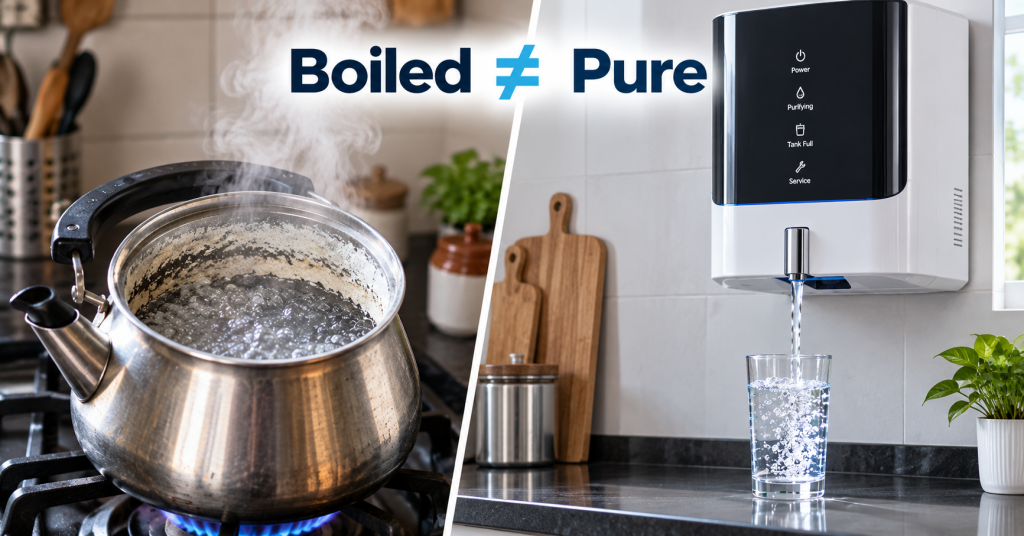
- Do not assume boiling fixes hardness. Some of the calcium drops out as scale, which is what you see in the kettle, but most of it stays in the water. Boiled hard water is still hard water.
What actually fixes it
Think of it as two separate jobs.
- Purified water for the kitchen: drinking, tea, coffee, dal and rice. An RO purifier removes the dissolved calcium and magnesium, and a good one keeps enough minerals for taste.
- A softener for everything else: bathroom, washing machine, geyser and dishwashing. It protects skin, hair and appliances, but keep it off the kitchen tap.
- Test first, then decide. A TDS reading tells you whether you need one, the other or both. Our RO vs UV vs UF buying guide walks through the choice.
If your supply is a borewell or a hard municipal line, the LUXGEN Aura RO purifier handles high-TDS water and retains enough minerals for tea that tastes like tea.
Bottom line
If your dal fights you and your tea looks dull, check the water before you change the brand. The dal is probably fine. The tea is probably fine. The water is the thing nobody tested.