The Water You Never See: One Coffee, One Shirt, One Phone

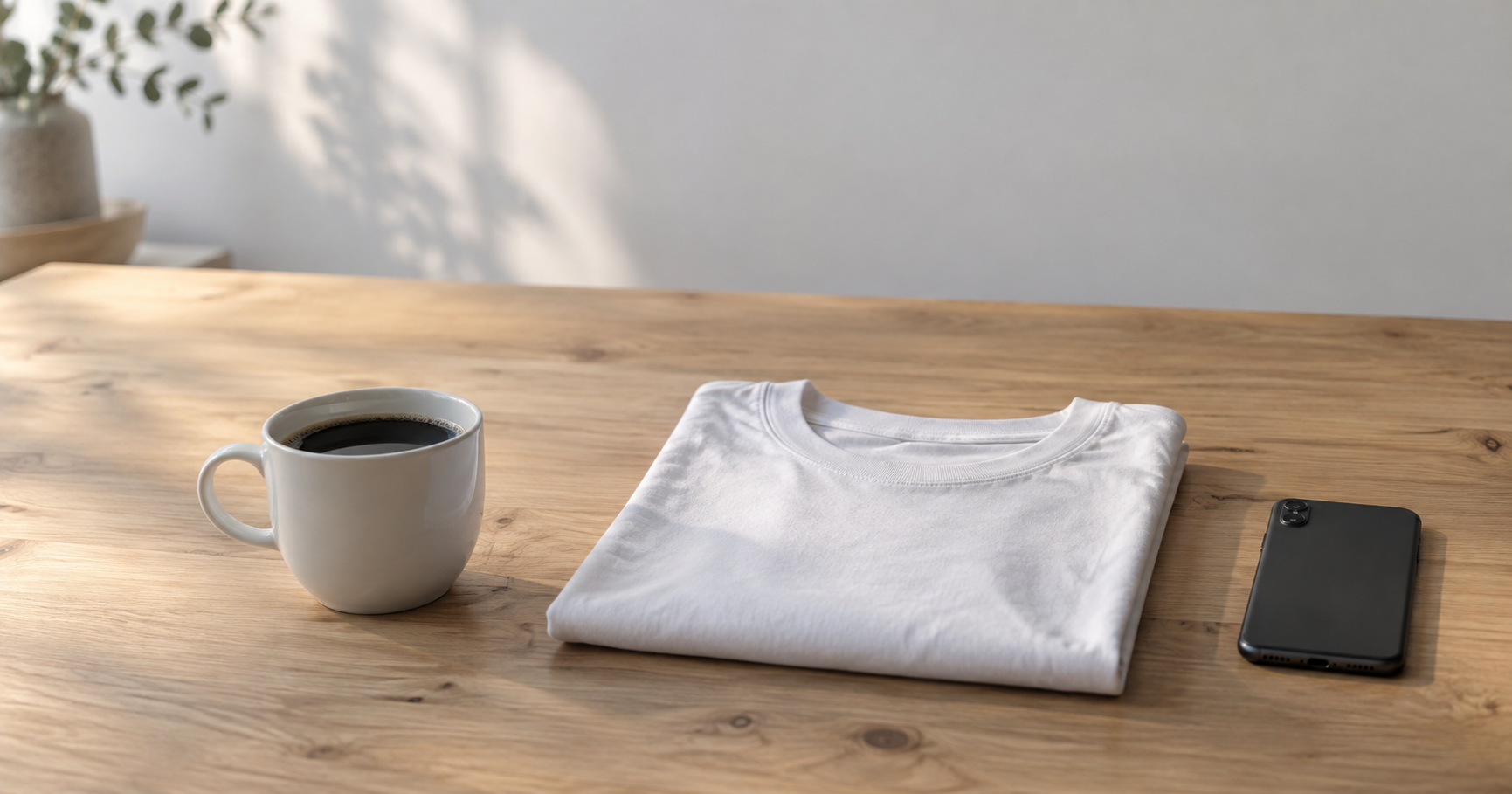
You drink maybe 3 litres of water a day. The coffee you had this morning took around 140 litres to make. That gap is the point of this post.
Below is the water footprint of everyday things: a cup of coffee, a cotton shirt, a phone. One thing first: these are global averages. The real number for any one item changes a lot depending on where it was grown or made, and how it was farmed. Read them as a sense of scale, not an exact bill.
What ‘water footprint’ actually means
A water footprint is all the fresh water used to make something, across the whole chain. For a shirt, that means watering the cotton field, processing the fibre, dyeing the cloth and cleaning up afterwards. It is not just the water you can see.
The idea was developed by researchers at the Water Footprint Network. It is sometimes called “virtual water”, because the water is used along the way, not contained in the thing you hold.
The three kinds of water, explained simply
Researchers split a footprint into three colours:
- Green water is rainwater that a crop drinks from the soil. A rain-fed coffee farm runs mostly on green water.
- Blue water is surface water and groundwater taken out for irrigation or industry. A paddy field fed by a borewell pump uses blue water.
- Grey water is the extra clean water needed to dilute the pollution a process creates. Diluting dye waste from a textile unit is one example. (It is not the same as grey water from your sink.)
The grey part is the hardest to measure, and it is the main reason phone estimates differ so much. It is also why what goes into a lake matters, as we saw with Ganesh Visarjan and our water.
One cup of coffee
A cup of coffee takes about 130 to 140 litres of water, according to the Water Footprint Network. Almost none of that is in your kettle. Nearly all of it goes into growing the coffee plant and processing the beans.
A cup of tea takes about 30 litres. That is not a reason to feel bad about coffee. It just shows that the drink in your hand carries a much bigger story.
One cotton shirt
A single cotton t-shirt takes about 2,700 litres, says the Water Footprint Network. Most of it goes into growing the cotton. Raw cotton takes about 10,000 litres per kg, and a pair of cotton jeans about 10,000 litres.
India is one of the world’s biggest cotton growers. So a lot of the water inside cotton clothes, possibly the shirt you are wearing, is Indian water. Where cotton is irrigated, much of it is pumped up from the ground.
One phone
Here the honest answer is that nobody fully agrees. Estimates for one smartphone run from about 900 litres to about 12,000 to 13,000 litres.
The difference comes from what gets counted. The lower figure mostly counts water used directly in manufacturing. The higher figure, from Friends of the Earth with Trucost, also counts mining the metals and the grey water needed to dilute the pollution along the way.
Anyone quoting a single, confident number for “the water in your phone” is oversimplifying. What is clear is that the real cost sits in mines and factories, not in the device itself.
Hidden water in everyday things
All figures are approximate global averages.
| Item | Approximate water footprint | Where most of it goes |
|---|---|---|
| Cup of coffee | About 130 to 140 litres | Growing and processing the beans |
| Cup of tea | About 30 litres | Growing the tea leaves |
| Cotton t-shirt | About 2,700 litres | Growing the cotton |
| Pair of jeans | About 10,000 litres | Growing the cotton |
| Smartphone | About 900 litres to about 12,000 to 13,000 litres (disputed) | Mining, manufacturing and pollution, depending on what is counted |
| 1 kg rice | About 2,500 litres | Growing the rice |
| 1 kg chicken | About 3,900 litres | Growing the chicken feed |
| 1 kg beef | About 15,400 litres | Growing feed over the animal’s life |
| Pair of leather shoes | About 8,000 litres | Raising the cattle behind the leather |
| A4 sheet of paper | About 5 litres | Growing the trees for pulp |
Why this matters more in India than in most places
In India, a lot of this hidden water is groundwater, pumped up to irrigate crops like rice and cotton. That is the same underground water our homes draw from through borewells.
So a crop grown on pumped water shares a source with the borewell in your building. When levels drop, wells go deeper, and deeper water can bring its own trouble; see our guide to borewell water problems in India.
Rain is what refills that source. That is why rainwater, collected and sent back into the ground, matters so much here. Our comparison of terrace rainwater vs borewell water looks at both.
What this does NOT mean
None of this is a reason for guilt. You cannot shower your way out of a 2,700-litre shirt, and nobody is asking you to give up your morning coffee.
The big water sits in things that get made, bought and thrown away. So the useful response is fewer wasted things, things that last longer, and less waste at the source. Worrying about your morning cup saves nothing.
What actually reduces it
- Buy fewer, better clothes and keep them longer. The water was spent when the cotton grew; wearing them longer makes that water count.
- Repair and reuse phones instead of upgrading yearly.
- Waste less food. Wasted food is wasted water, including all the water that grew it.
- Harvest rainwater and recharge groundwater. See what rainwater is good for in our rainwater vs borewell guide.
- Fix leaks. A dripping tap is the one water loss you can see.
Saving water directly at home is small next to all this, but it is still worth doing.
And the water you do drink
The 3 litres you actually drink is the one part fully in your control, and there, quality matters, not quantity.
Know your source and test its TDS. Here is the best TDS level for drinking water, and our list of common water impurities shows what else can be in it. If you need a purifier, the RO vs UV vs UF buying guide helps you pick a type. For high-TDS water, the LUXGEN Aura is one RO+UV+UF option.
Bottom line
The water you can see is a rounding error next to the water you cannot. Knowing that should change what you buy far more than how long you brush your teeth.