

Can You Install a Water Purifier Yourself? An Honest Answer

The short answer is yes. Physically, you can install a water purifier yourself. A wall-mount purifier is a bracket, an inlet tap, a drain line and a plug point. None of that is mysterious. The longer answer is that four things decide whether you should, and none of them is skill. One thing first: we sell purifiers, so weigh what follows with that in mind. We will still tell you where doing it yourself is perfectly fine.
What installation actually involves
Every wall-mount install comes down to four jobs.
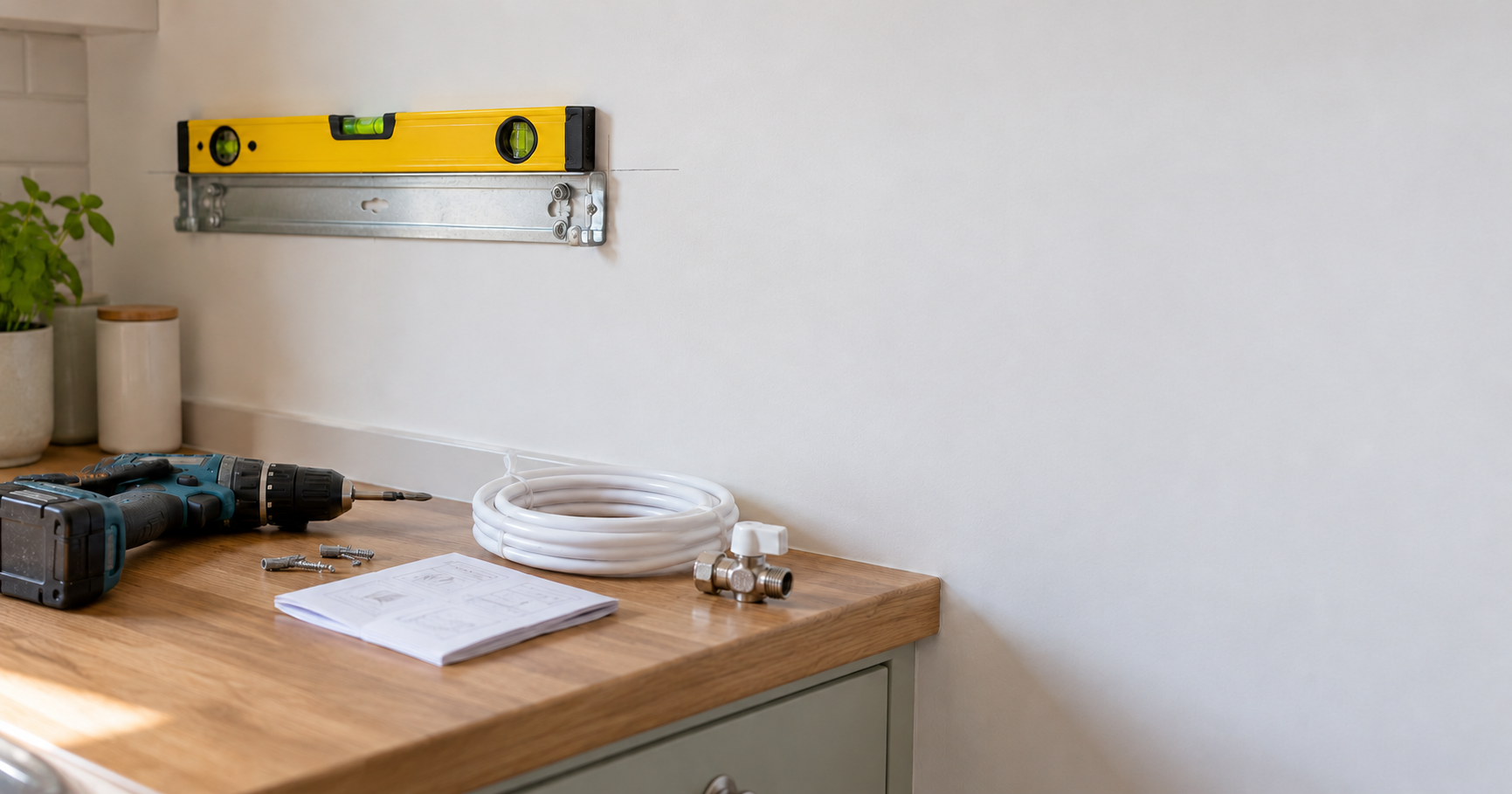
- Mounting the unit. It has to hang level and secure on a wall that can hold it with a full tank of water inside, which is a lot heavier than the empty box suggests.
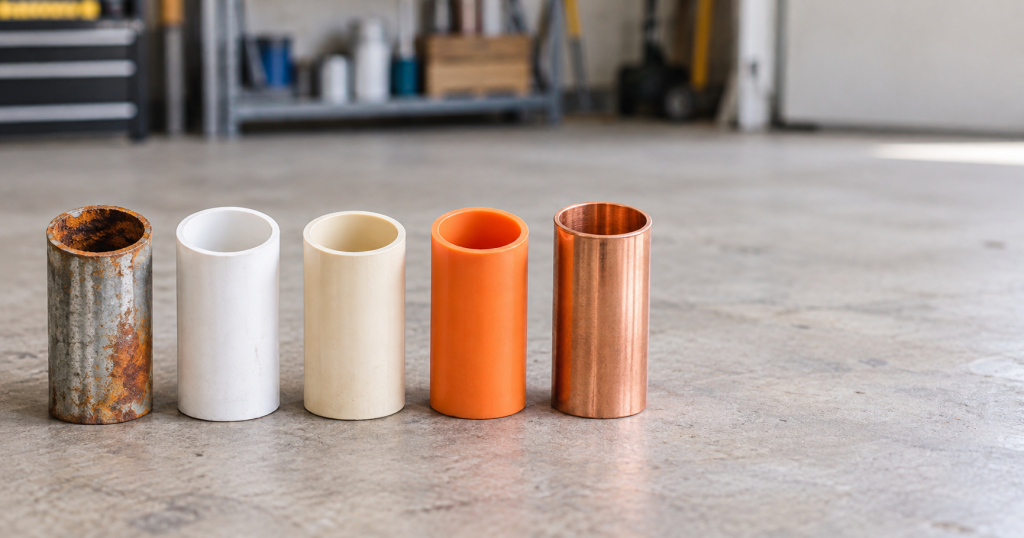
- Tapping the inlet. The purifier needs a cold water supply with its own isolating valve, so it can be shut off without cutting water to the whole kitchen. What your pipes are made of matters here; our guide to CPVC, PVC, GI, PEX and copper water pipes explains the differences.
- Routing the drain. An RO purifier sends reject water out through a drain line, and that line needs somewhere sensible to go.
- A plug point. The unit runs on mains power, usually through an adapter, and the nearest socket is often near a wet cabinet.
The four things that decide it for you
- Your wall. A solid wall and a hollow partition behave very differently when you hang weight on them. You also need to know whether pipes or wiring run behind the spot you have chosen.
- Your inlet. If a tap point with an isolating valve already exists, connecting to it is simple. If one has to be created on a pressurised line, that is plumbing work, not purifier work.
- Your drain. Reject water has to go somewhere it can flow freely and not back up into the unit.
- Your warranty. Some brands require installation by an authorised technician. Others do not. Read the warranty card before you open the box.
The warranty is the only one of the four with a clear yes or no answer, and it is answered on paper, not by skill. Do not assume either way. Check your own card.
The electrical detail people miss
The adapter runs on mains voltage, and it usually sits in a cabinet where water lives. A slow drip from a joint can run down a pipe and find a socket. The socket should be placed so a leak cannot reach it, ideally above the unit rather than below it, and never where water collects on the cabinet floor. This is the one part not to improvise. If the nearest socket is low down or inside the sink cabinet, get an electrician to move it, regardless of who fits the purifier.
Where doing it yourself is genuinely fine
- A counter-top unit that only needs a tap connector and a socket.
- Replacing an old purifier in a spot where the bracket, inlet and drain are already in place.
- Moving your own unit to a new house where the plumbing is already set up for one.
In these cases, paying for installation adds little. You are swapping like for like, and the hard decisions were made long ago. Read the new unit’s manual anyway, because connection sizes and fittings can differ between models, even from the same maker.
Where it is not worth it
- A first install in a kitchen with no existing tap point.
- A wall you are unsure about.
- A unit with a booster pump and several connections.
- A warranty that requires an authorised fitter.
- A rented flat where drilling needs the owner’s permission.
Who should fit it
| Situation | DIY or technician | Why | What to check first |
|---|---|---|---|
| Counter-top unit | DIY | Only a tap connector and a socket | The connector fits your tap |
| Replacing an existing wall unit | DIY | Bracket, inlet and drain already exist | The old valve still shuts off fully |
| First wall install, tap point ready | Either | Plumbing is done; the wall is the question | Wall type and what runs behind it |
| First wall install, no tap point | Technician | Needs work on a pressurised line | Where the inlet can safely go |
| Unit with booster pump | Technician | More connections, more joints | Warranty terms and socket position |
| Rented flat | Depends | Drilling may need permission | Your rental agreement |
What to insist on, whoever fits it
- An isolating valve on the inlet, so the purifier can be shut off on its own.
- A drain line that is secured, not left loose in a sink.
- The socket placed away from any path a leak could take.
- The first fills run and thrown away before anyone drinks. Our post on plastic taste from a new water purifier explains why.
- The discard-cycle count in your model’s manual followed exactly.
Signs it was fitted badly
- The tank fills slowly.
- A hum or knock that was not there before. Our guide to why a water purifier is noisy helps you tell normal from not.
- A drip at a push-fit joint.
- A drain line that backs up or smells.
- A unit that moves when you press it.
Most of these are fixable in one visit if caught early. Do not live with them for months.
And the part nobody checks first
Fitting is the last step, not the first. A neat installation of the wrong purifier is still the wrong purifier. Before any of this, ask whether your water actually needs the purifier you bought. Test your TDS and compare it with our guide to the best TDS level for drinking water. If you have a lab report, our guide on how to read a water test report walks through it. Then decide between a water filter and a water purifier, and use our RO vs UV vs UF buying guide to pick the type. If your water does call for RO, the LUXGEN Royale Copper is a wall-mount RO, UV and UF purifier with a TDS controller.
Bottom line
You can fit a purifier yourself in several common situations, and nobody should talk you out of it. The three things that should stop you are a wall you are unsure about, a warranty that says otherwise, and a socket near water.